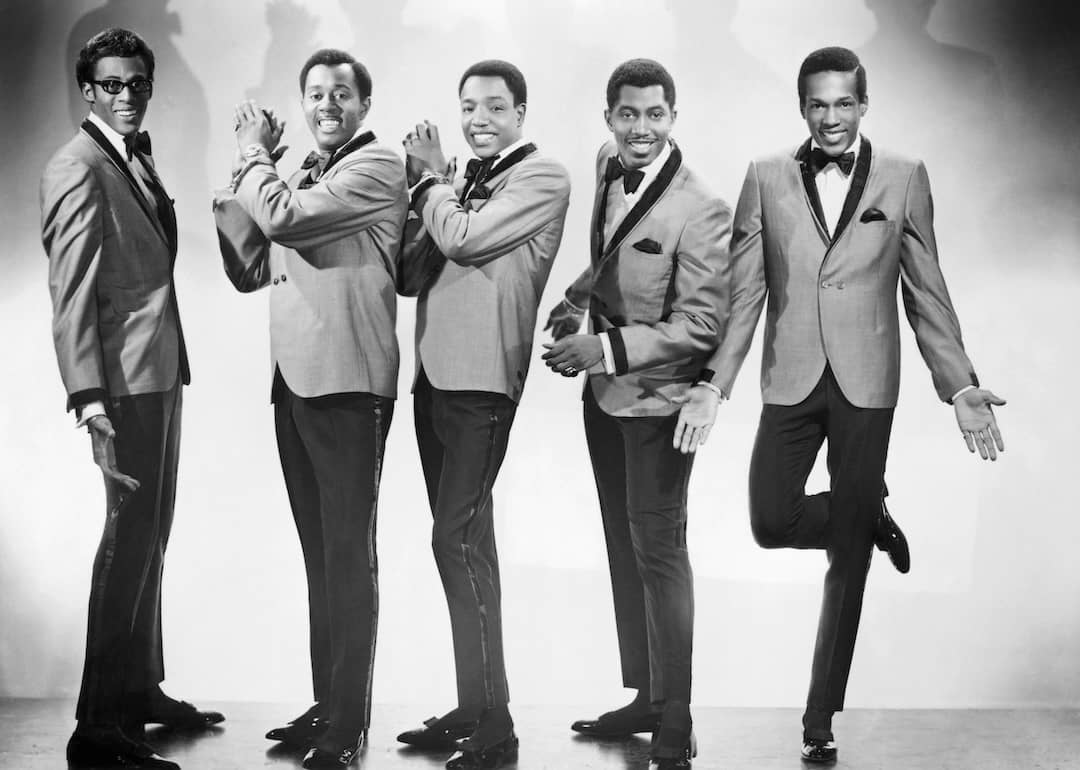
What the biggest &x27;60s bands look like now Eliza Siegel Wed, September 2, 2026 at 3:15 PM UTC 0 David Ruffin, Melvin Franklin, Paul Williams, Otis Williams, and Eddie Kendricks of “The Temptations” pose for a portrait in New York City in 1965. Bestselling bands of the &x27;60s, then and now The rumblings of rock &x27;n&x27; roll, the sounds of soul and funk, and the formation of the folk movement were already underway in the U.S. by the time the 1960s rolled around.
What the biggest '60s bands look like now

Eliza Siegel Wed, September 2, 2026 at 3:15 PM UTC
0
David Ruffin, Melvin Franklin, Paul Williams, Otis Williams, and Eddie Kendricks of “The Temptations” pose for a portrait in New York City in 1965. -Bestselling bands of the '60s, then and now
The rumblings of rock 'n' roll, the sounds of soul and funk, and the formation of the folk movement were already underway in the U.S. by the time the 1960s rolled around. Even so, few people were prepared for the way in which popular music would seep into every area of American life, providing a backdrop to political and social events as they unfolded, while simultaneously creating a new reality. From protest movements to music festivals, the 1960s ushered in a new era of music that would not only be remembered for the way it sounded, but also for the culture it formed and defined.
The '60s brought more and more genres of music onto the airwaves, from psychedelic rock— inspired by the prevalence of LSD within the youth culture of the time—to the rising popularity of funk and soul-infused pop coming out of Motown. At the same time, counterculture movements—which balked at the horrors of war along with the strict norms and buttoned-up values of the decades prior—emerged alongside the momentum of the Civil Rights Movement. These calls to action gave rise to a wide array of music, from the protest folk of musicians like Bob Dylan and Joan Baez to the blues and soul of artists like Nina Simone.
The new decade also brought a change to music and fan culture. Beginning in the late '50s with performers such as Elvis and fully emerging in the '60s with the Beatles and other highly popular groups, musicians and bands entered the realm of superstars, with devoted fans crowding in at performances and often joining bands on the road while they toured. The emergence of music festivals like the Monterey Pop Festival, Woodstock, and the Harlem Cultural Festival also redefined the culture around seeing music live.
But how did some of the biggest bands of the '60s get their start, and where are they now? Using data from the Recording Industry Association of America from the 1960s, Stacker researched the bestselling music groups of the decade and spotlighted 25 of the best, detailing how they started then and where they are now. Bestsellers were determined by their diamond, platinum, or gold ratings by the RIAA, and solo artists were not included in the list.
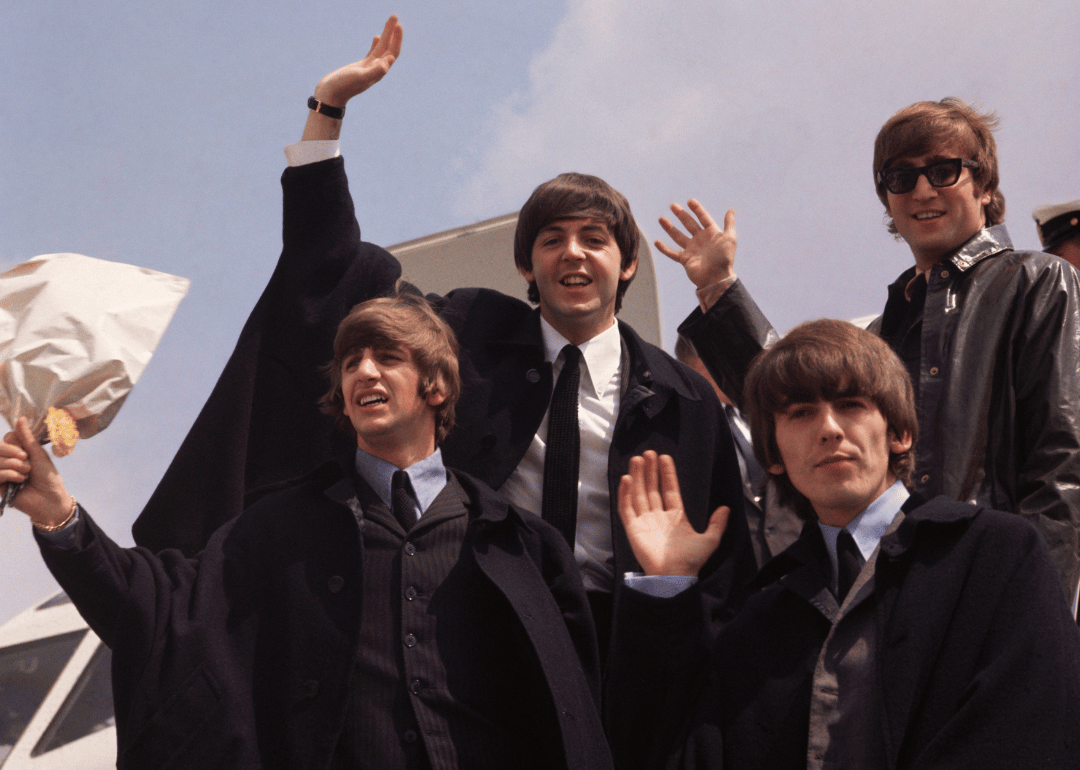
The Beatles wave from an airplane in London. -The Beatles: Then
Paul McCartney, John Lennon, and George Harrison formed what would become one of the most influential musical groups of all time in Liverpool in 1958, trying out several drummers (most prominently Pete Best) before landing on Ringo Starr in 1962. The Beatles gained popularity quickly, recording hit singles in the early '60s like "Please Please Me" and playing around the U.K. before booking a pivotal gig on the American variety program "The Ed Sullivan Show"—a performance that would introduce them to U.S. audiences and begin the era of "Beatlemania" across the world. Between 1963 and 1970, The Beatles released around a dozen bestselling albums and cemented their pop legacy.
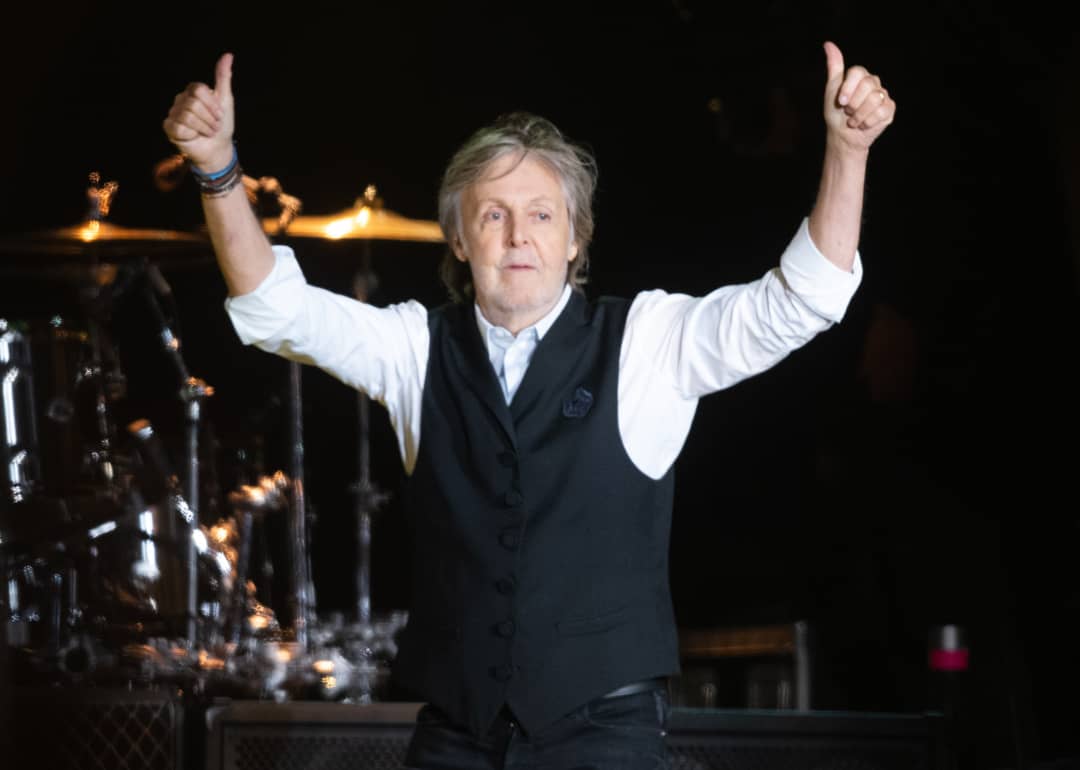
Paul McCartney performing at Glastonbury Festival in 2022. -The Beatles: Now
By the late '60s, The Beatles' relationships were becoming strained, and seismic changes were underway. Brian Epstein, the band's beloved manager, died of a drug overdose in 1967, and John Lennon's relationship with Yoko Ono (the latter, who received unfair blame for breaking up the band) was starting to flourish. Mostly, the priorities, attitudes, and creative desires of the four members were shifting in many directions.
By 1970, irreconcilable differences led the band members to part ways. A decade later, Lennon was shot and killed by Mark David Chapman outside his apartment building, and George Harrison died of lung cancer in 2001. Paul McCartney and Ringo Starr have had successful musical careers of their own since the band's disbandment, and both McCartney and Starr released new albums in 2026. The duo continues to build The Beatles' legacy as well. In 2024, McCartney and Starr finished The Beatles' final song, "Now and Then," which went on to win Best Rock Performance at the Grammys in February 2025.
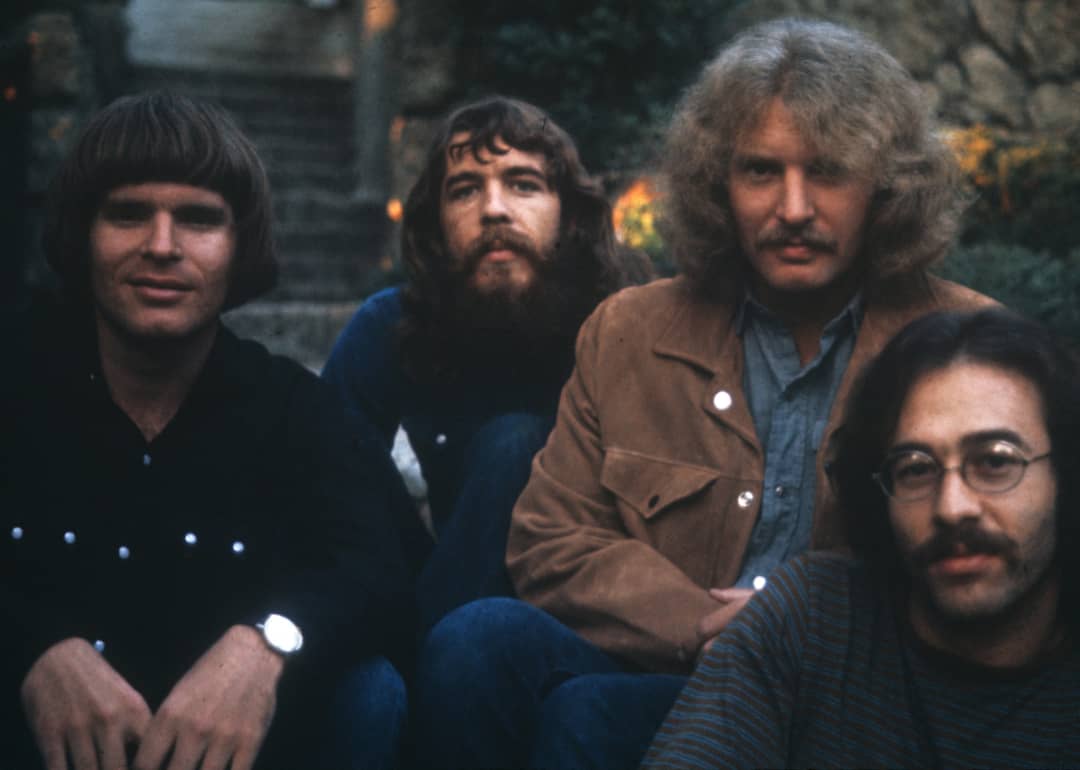
Portrait of Creedence Clearwater Revival. -Creedence Clearwater Revival: Then
Creedence Clearwater Revival, or CCR, was made up of brothers John and Tom Fogerty, along with Stu Cook and Doug Clifford. After forming in California in 1959 and playing under various names, including The Blue Velvets and The Golliwogs, the band settled on Creedence Clearwater Revival in 1967 and never looked back. The group's rise to fame was quick, producing hits like "Proud Mary" and "Bad Moon Rising." In 1969, CCR played at the legendary Woodstock festival, and though the set did not go as planned, it boosted the band's popularity into the early '70s.
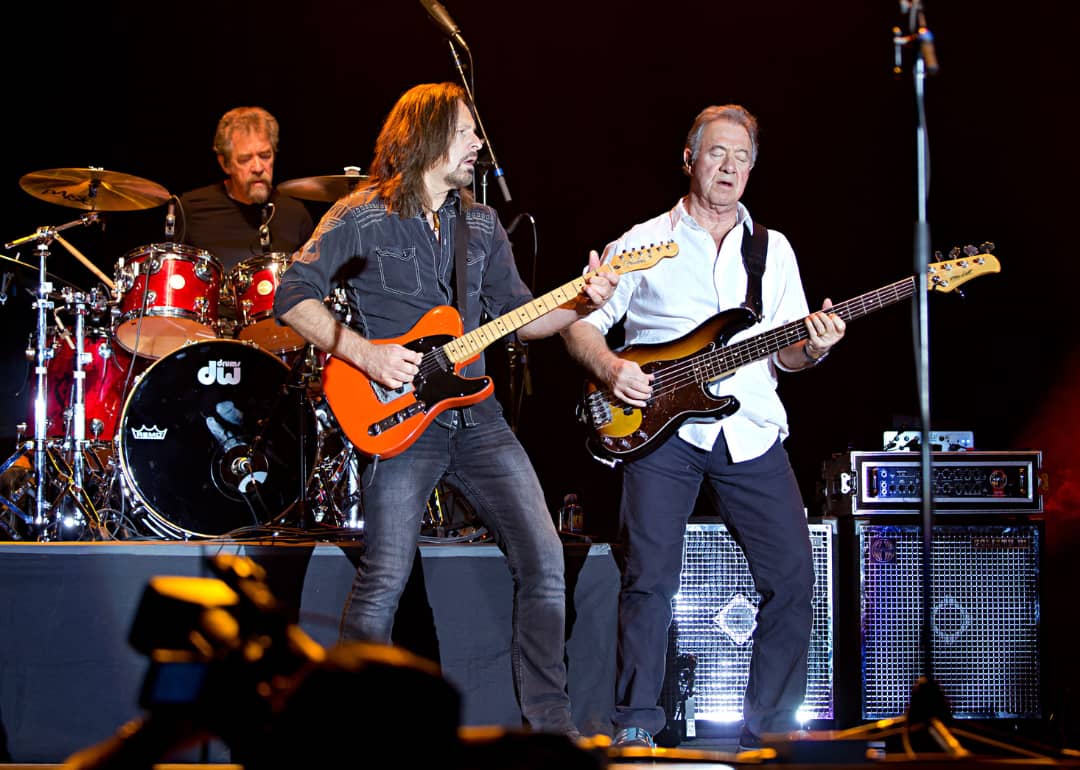
Creedence Clearwater Revisited performing live in 2016. -Creedence Clearwater Revival: Now
Ultimately, CCR's tenure as one of the top-selling bands of its time was short-lived. In 1972, the group bitterly split up. Tom Fogerty had left to pursue a solo career the year before. At the same time, Cook and Clifford found themselves in an acrimonious conflict with John Fogerty over the band's final album and its future.
The feud that broke the band up decades later continued to play out, sometimes in highly public ways. In the early '90s, when the original Creedence Clearwater Revival was inducted into the Rock & Roll Hall of Fame, John Fogerty allegedly refused to play with the rest of the band members at the induction ceremony. After that, Cook and Clifford formed a new band, Creedence Clearwater Revisited, which plays live versions of CCR songs—a contentious move that prompted John to sue the other two, to no avail. Tom Fogerty died in 1990.
In an August 2025 interview with People, John Fogerty said he forgave his brother after reclaiming the rights to CCR songs in 2023. He rerecorded much of that music with his sons for the album "Legacy: The Creedence Clearwater Revival Years," released on Aug. 22, 2025.
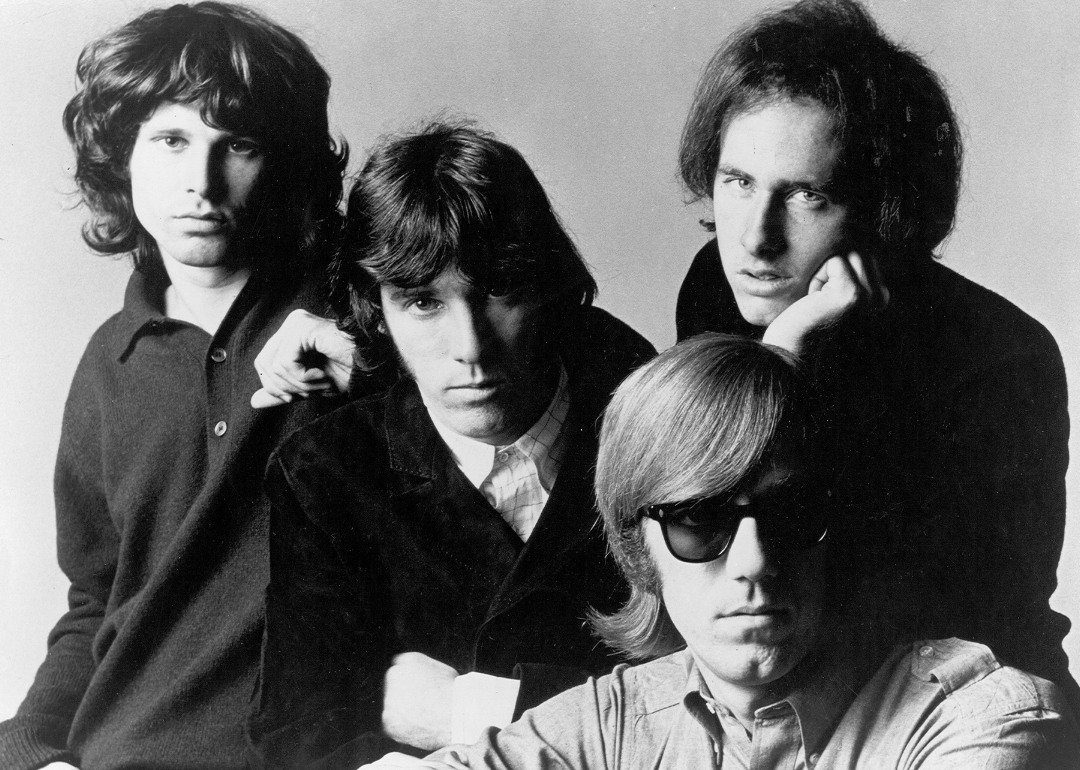
The Doors pose for promotional portrait. -The Doors: Then
Nicknamed "the Kings of Acid Rock," the Doors formed in the mid-'60s at UCLA when Jim Morrison and Ray Manzarek began collaborating musically; they were later joined by Robby Krieger and John Densmore. The group began getting gigs around Los Angeles, including a residency at the illustrious venue Whiskey A Go-Go, where it opened for Buffalo Springfield and other huge acts.
After signing with Elektra Records, the Doors were fired from their residency when Morrison improvised an outrageous song—but far from proving to be a setback for the group, the song instead propelled them into recording their first album and became a standard part of the band's act. As the Doors rose to fame, their disregard for authority and progressively rowdier and more irreverent stage appearances (and Morrison's several arrests) endeared them to a generation of young people defined by counterculture.
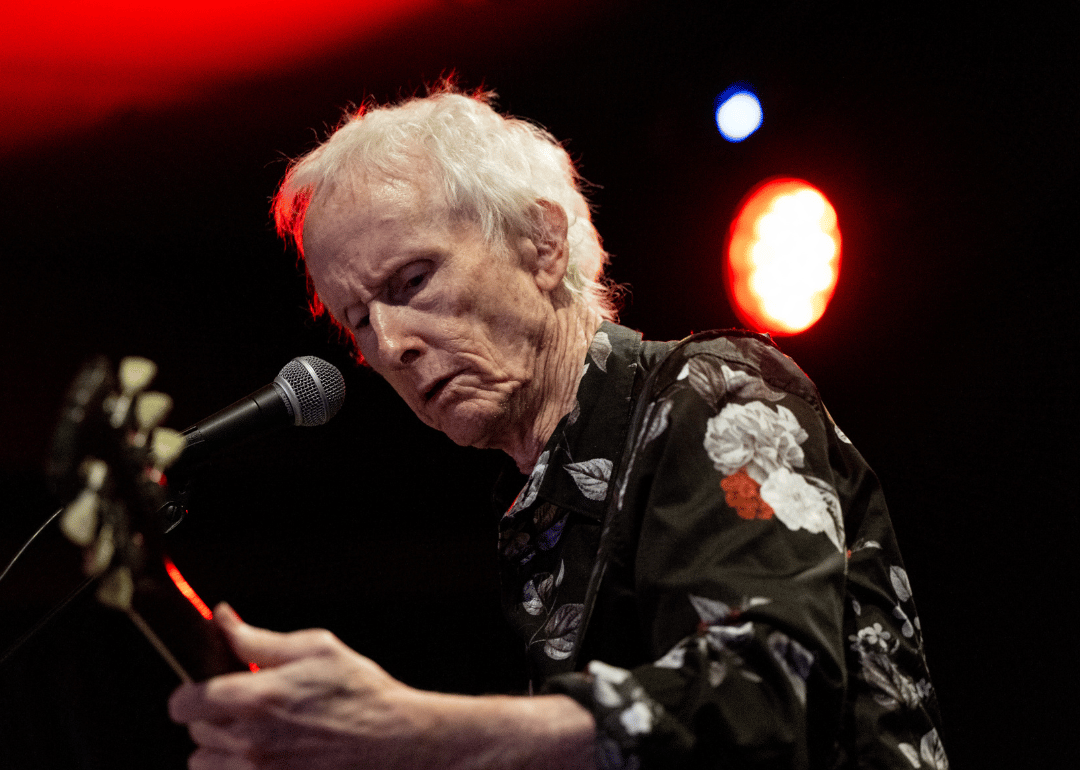
Robby Krieger performs onstage in 2023. -The Doors: Now
The Doors' musical career was cut short in 1971 when Jim Morrison died in Paris of heart failure. Speculation over the years has suggested that Morrison's heavy substance use was the cause, but no autopsy was ever performed. He was buried in Paris' famous Père-Lachaise cemetery before word got out to the public about his death.
The band continued to perform for two years after Morrison's death, but it soon broke up without a frontman. In 1974, Morrison's wife Pamela Courson died of an overdose. Decades later, Manzarek and Krieger reunited, along with a different lead singer, and began producing music under the name the Doors of the 21st Century, provoking a legal battle between them and Densmore and Morrison's estate over the use of the name.
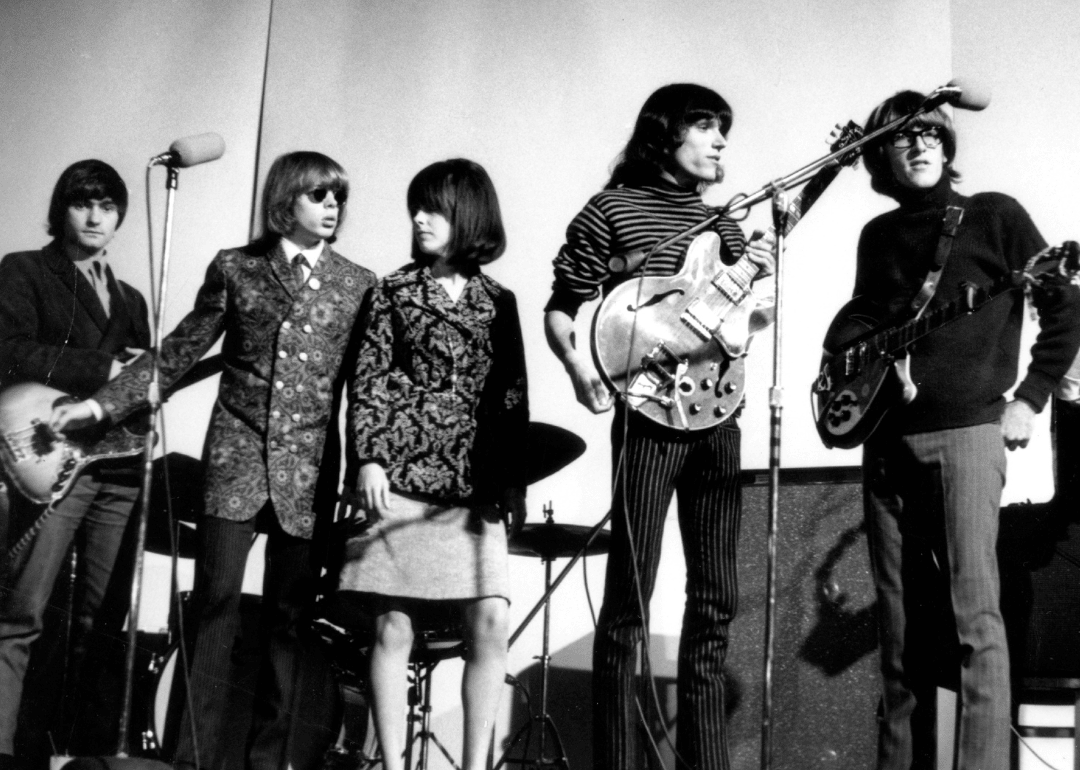
Jefferson Airplane on stage. -Jefferson Airplane: Then
Psychedelic rock group Jefferson Airplane started in San Francisco in 1965 when musician Marty Balin bought a nightclub called the Matrix and assembled a house band. Lead singer Balin—along with Paul Kantner, Grace Slick, Jorma Kaukonen, Spencer Dryden, and Jack Casady—quickly rose to stardom with songs like "White Rabbit" and "Somebody to Love." Jefferson Airplane played Woodstock in 1969, but as it became more experimental with its sound in the early '70s, the band lost some of its early commercial success.
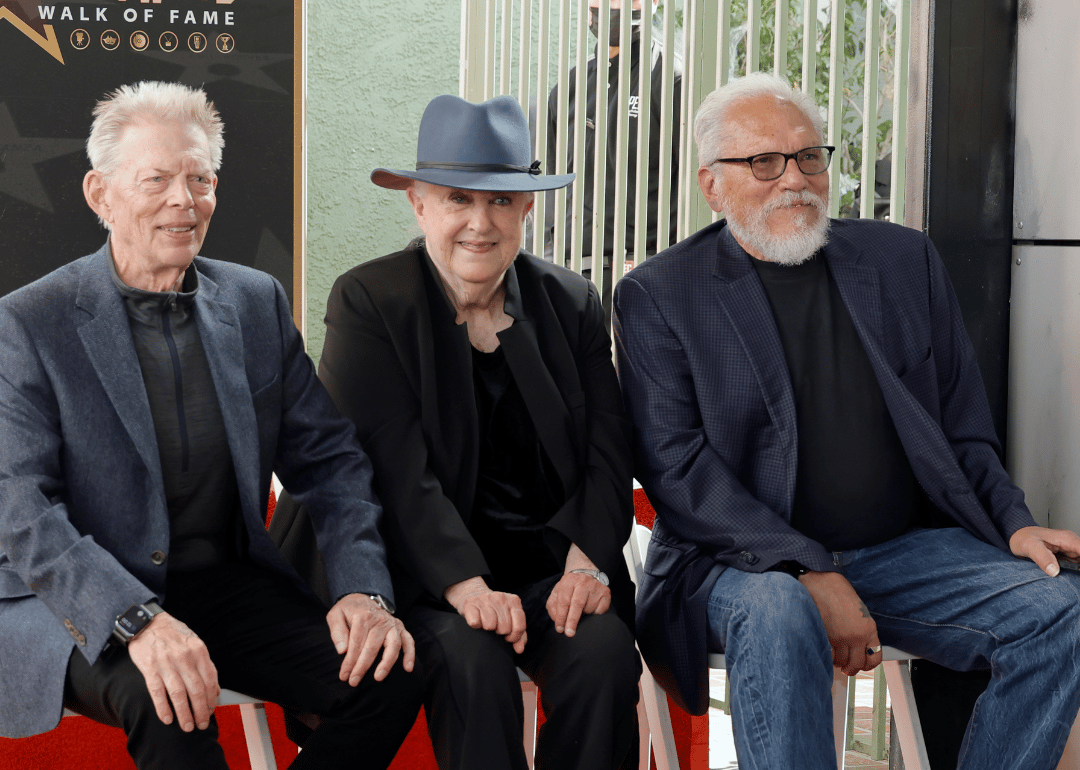
Jack Casady, Grace Slick, and Jorma Kaukonen on The Hollywood Walk of Fame in 2022. -Jefferson Airplane: Now
The band split in 1972 after differing creative visions and substance use pulled the band members apart. Several members went on to form an offshoot group called Jefferson Starship, while the remaining two members stuck together and created a band called Hot Tuna. The original Jefferson Airplane was inducted into the Rock and Roll Hall of Fame in 1996. Spencer Dryden, Marty Balin, Paul Kantner, and several other short-term band members have passed away. Jefferson Starship, meanwhile, is in the midst of a 50th anniversary tour, with dates scheduled through March 2027.
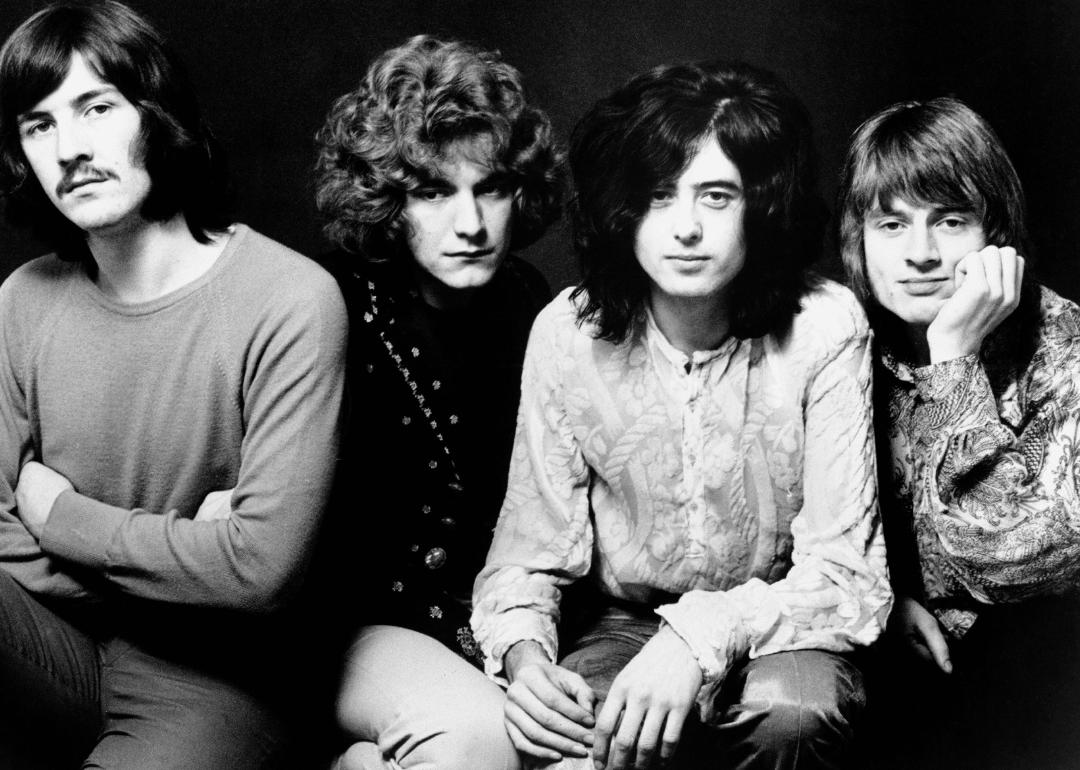
Led Zeppelin pose for a publicity portrait. -Led Zeppelin: Then
Formed in 1968, British rock band Led Zeppelin came to be when Jimmy Page, freshly solo from the implosion of his former band the Yardbirds, started to gather musicians to form a new group. With singer Robert Plant, John Bonham, and John Paul Jones, Page launched the New Yardbirds, but after a rebrand, the group released its first album in 1969 as Led Zeppelin while on tour. The album was an immediate success and established the band as a defining group of the following decade.
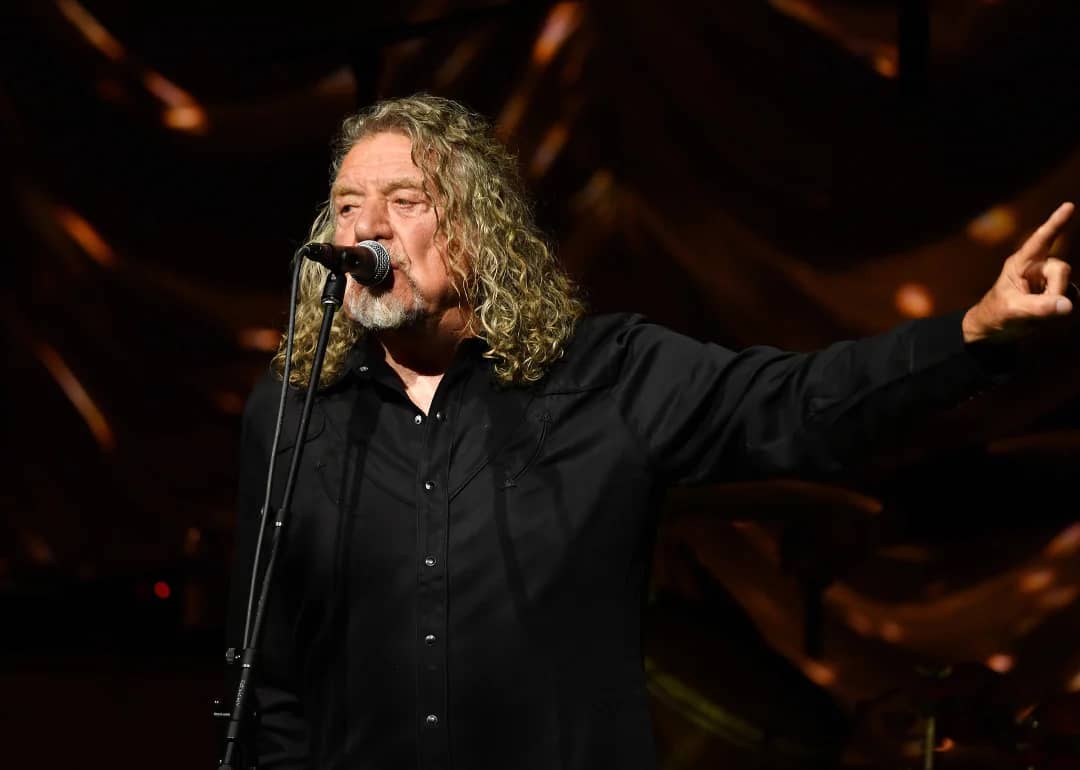
Robert Plant performing in June 2023. -Led Zeppelin: Now
After over a decade of success and eight studio albums, the band broke up in 1980 after drummer John Bonham died unexpectedly. The band had been about to embark on a tour, but ultimately decided the group was incomplete without its original drummer and disbanded. Robert Plant launched a successful solo career in 1982, and the other band members continued their musical projects. Plant is still on tour in 2026, with dates scheduled around the world through October.
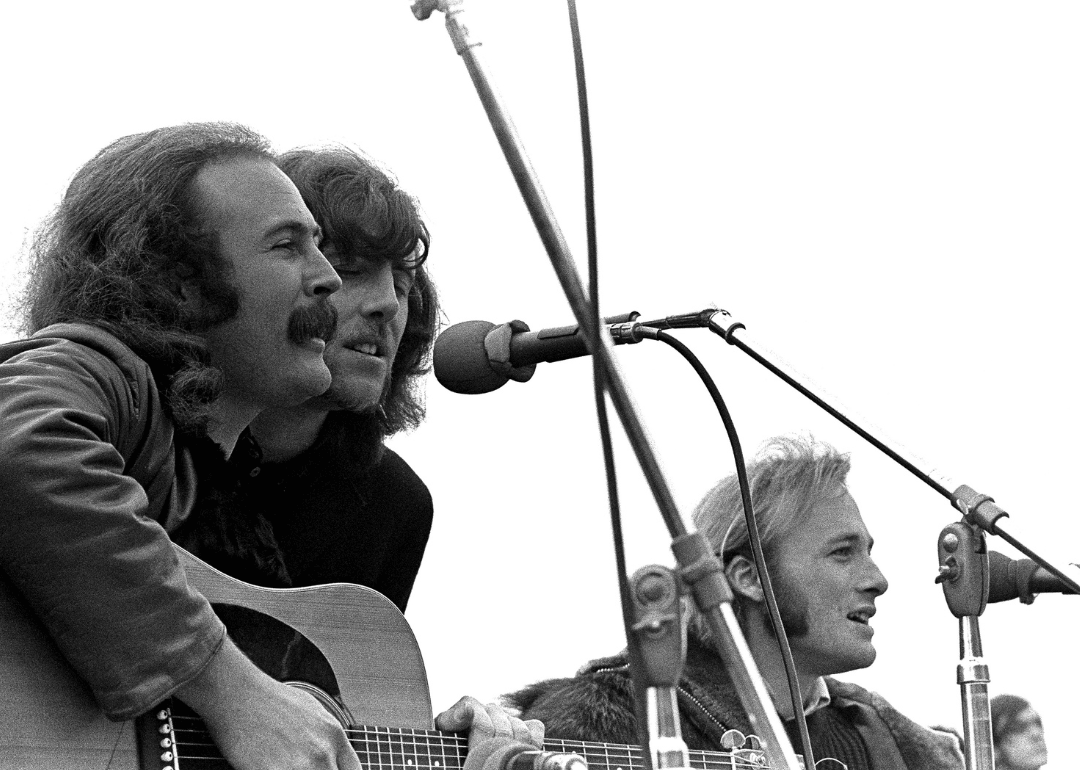
Crosby, Stills and Nash performing live. -Crosby, Stills, & Nash: Then
The musicians who would go on to form the supergroup Crosby, Stills, & Nash, or CSN, in 1968 were already stars in their own right by the time the late '60s rolled around. David Crosby played with the popular group the Byrds, but was fired; Stephen Stills was in Buffalo Springfield, but the band had broken up shortly before; and Graham Nash played with the Hollies.
After the three played casually together at a party in LA and found that they had instant musical chemistry, Nash quit the Hollies, and Crosby, Stills, & Nash was born. They released their first, self-titled album in 1969 and were an immediate success, known for their tight harmonies. In 1970, they were joined by a fourth member, Neil Young, who had played with Stills in Buffalo Springfield.
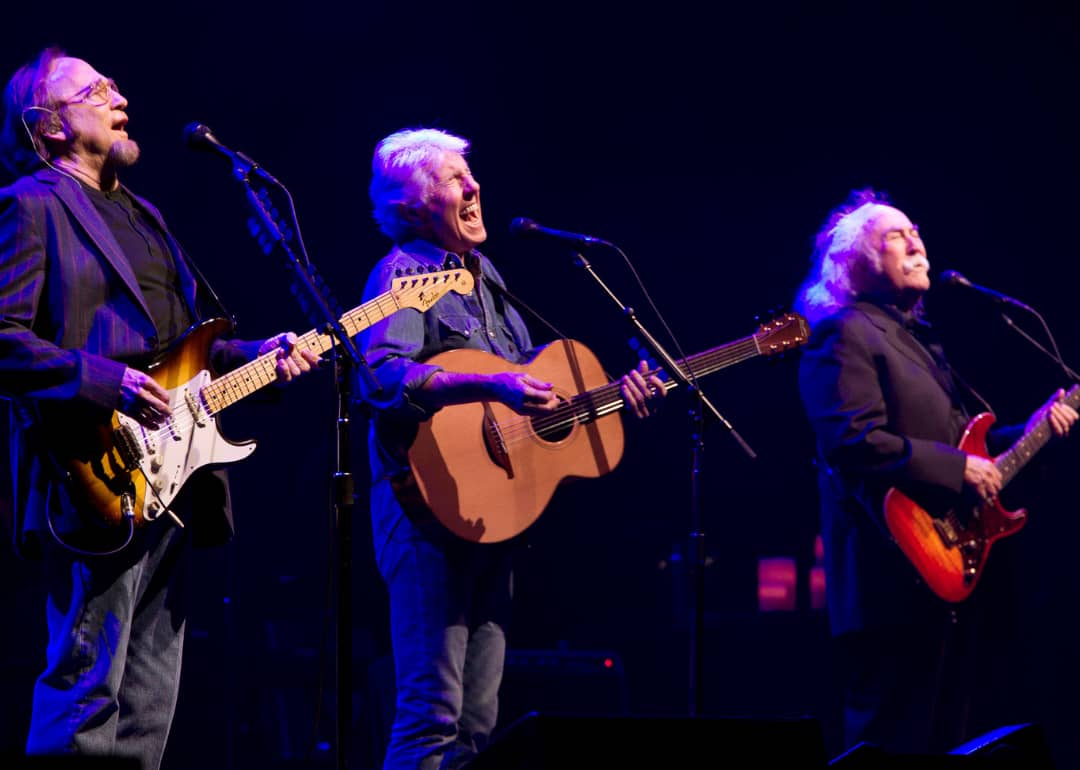
Crosby, Stills & Nash performing in 2015. -Crosby, Stills, & Nash: Now
Crosby, Stills, Nash, & Young split up and reformed—often in different variations of the group—multiple times over the course of the following decades, last splitting in 2016. The band has become known for its continuous interpersonal conflicts caused by ego battles, substance use, rivalry, and fights over women. David Crosby died in early 2023, and Graham Nash told Rolling Stone in October 2024 that the group won't play together again, saying that "there's no heart there" without Crosby.
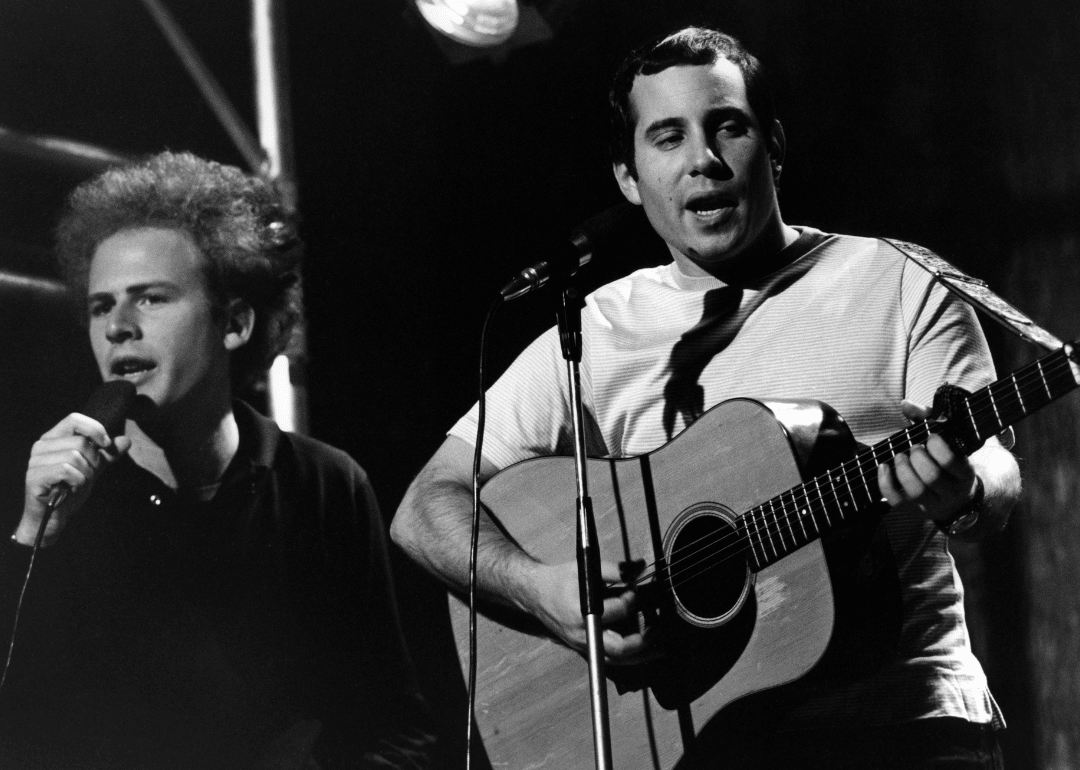
Simon & Garfunkel perform on ‘Ready Steady Go!’. -Simon & Garfunkel: Then
Paul Simon and Art Garfunkel met as grade-schoolers in Queens, New York, in the early '50s, and began working on music together as teens. They began recording under the name Tom & Jerry when they were 15, scoring a surprise hit with "Hey Schoolgirl." By the early '60s, both Simon and Garfunkel were attending college while still playing music.
The duo got a record deal with Columbia and became Simon & Garfunkel in 1963, and in '64 they released their first album, "Wednesday Morning, 3 A.M." Animosity between the two had already begun by then. Despite this, the two released several successful albums during the '60s, and were further boosted by the featuring of their music in the hit film "The Graduate."
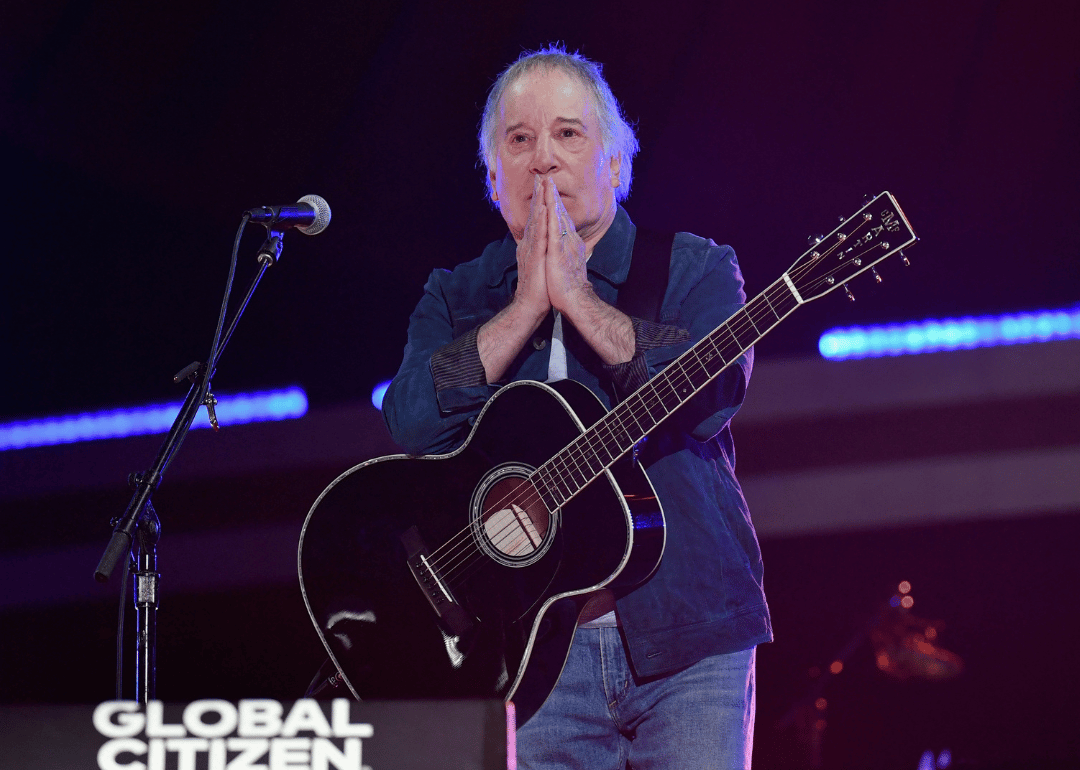
Paul Simon performing at Global Citizen Live festival in 2021. -Simon & Garfunkel: Now
The two parted ways after "Bridge Over Troubled Water"—their most successful album—was released in 1970. Simon, the duo's songwriter, was offered solo projects and succeeded as a solo artist. Garfunkel, meanwhile, was the primary singer, which may have garnered him more attention from fans. The snowballing rivalry between the pair, mostly over recognition, jealousy, and control over the group, ultimately drove them apart. Though they've reunited for a few live performances, they have not produced any more studio albums.
As for what the future holds, Garfunkel told People in an April 2025 interview, "I have always loved my partner, and I know that is reciprocal. Reunion? It is a significant question. Paul and I will keep talking. We may give it a try and see where it leads. You never know. Paul is touring now, and I applaud him for being so generous and innovative. My partner is an amazing talent."
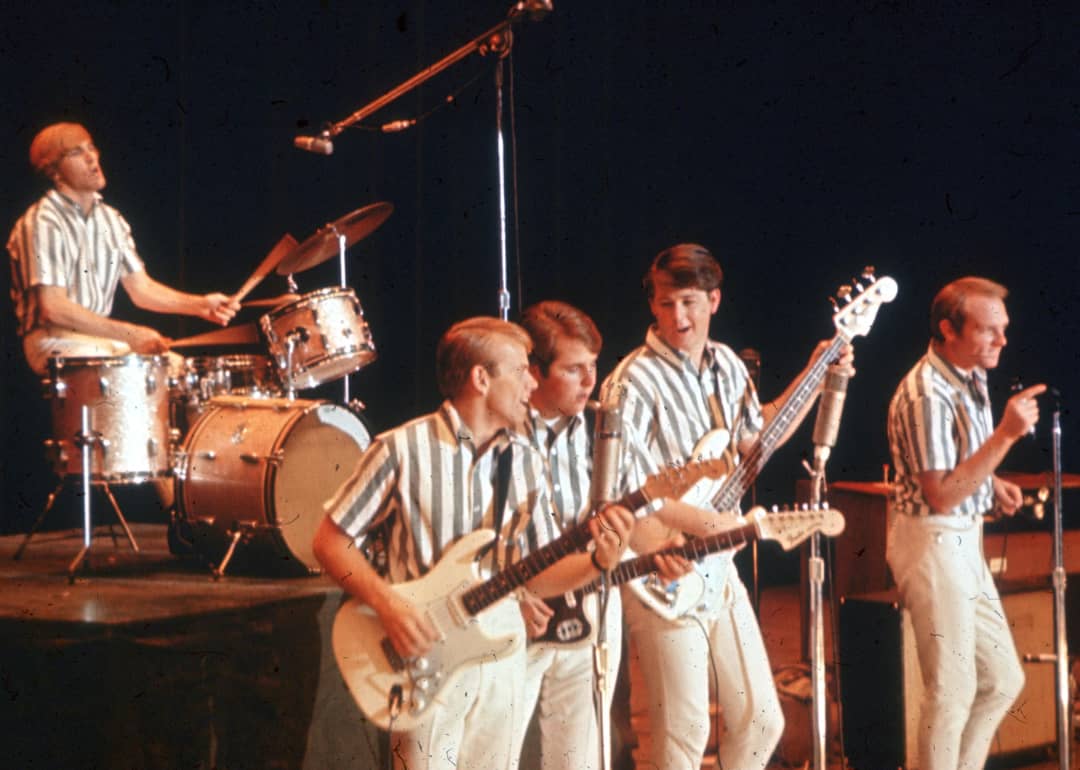
The Beach Boys perform onstage. -The Beach Boys: Then
The Beach Boys was a family band, made up of brothers Brian, Dennis, and Carl Wilson, their cousin Mike Love, and friend and neighbor Al Jardine. The band began in 1961 when Dennis and Mike went fishing and decided to try their hand at writing a song about surfing. Soon after, the group created a demo of two original songs, gained popularity in Southern California, and was later signed by Capitol Records. The Beach Boys' momentum continued when they were tapped to help promote the release of Mattel's Barbie dolls by singing the song "Barbie." Their rise was cemented with the 1966 album "Pet Sounds."
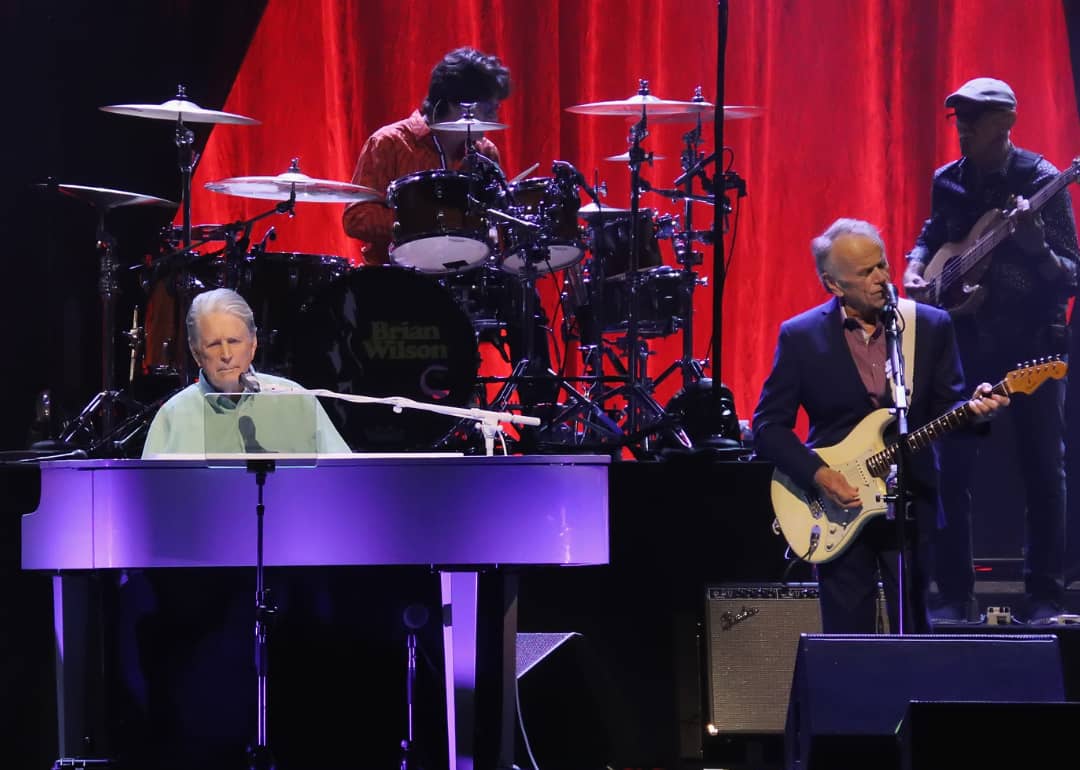
Brian Wilson and Al Jardine perform in concert in 2021. -The Beach Boys: Now
Though the Beach Boys continued playing into the '70s, fractures began to form when substance use, mental health issues, and family betrayals and rivalries became more dominant in the lives of the band members. Brian and Mike's contentious relationship, as well as Dennis' association with the Manson family and eventual death by drowning in 1983, put an end to the band known for its happy-go-lucky sound and soaring harmonies. Carl Wilson died in 1998 of lung cancer, and Brian Wilson passed away in June 2025 due to natural causes.
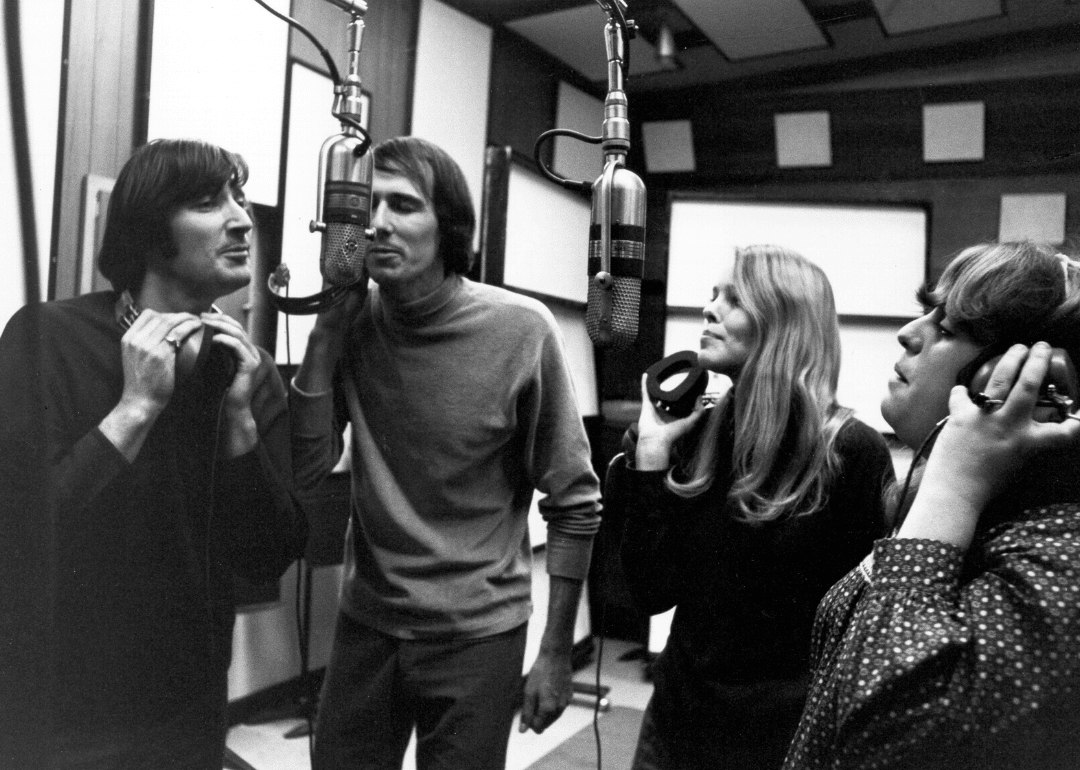
The Mamas and the Papas recording in the studio. -The Mamas & the Papas: Then
The Mamas & the Papas formed in 1965, when John and Michelle Phillips, Denny Doherty, and Cass Elliot came together in Los Angeles. John and Michelle were married, and Denny Doherty and Cass Elliot joined the musical group later. The group's first hit, "California Dreamin'," launched them to prominence in the folk-pop scene, but the group was not destined for a long run, due to a string of messy infidelities and unrequited affection.
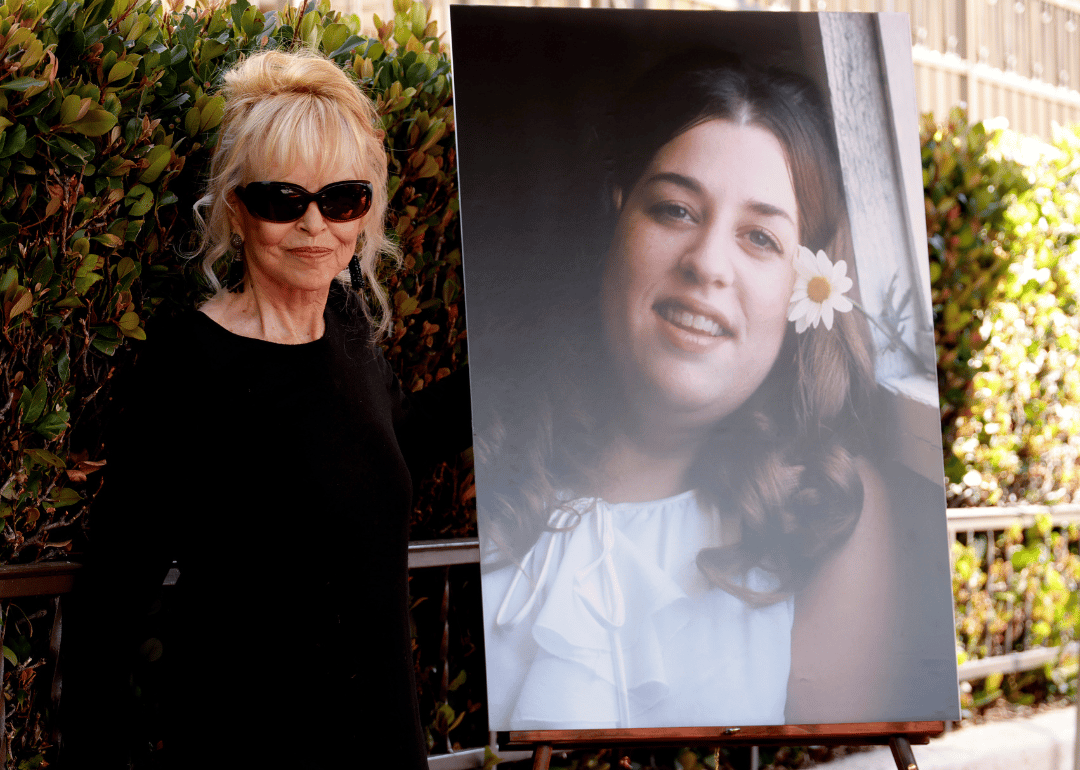
Michelle Phillips attends the Hollywood Walk of Fame star ceremony for Cass Elliott in 2022. -The Mamas & the Papas: Now
The band dissolved by 1969, after John engaged in unfaithful and abusive behavior, Michelle and Denny began an affair, and Cass fell for Doherty—a feeling that was not reciprocated. Cass died in 1974 of heart failure, which temporarily reunited the remaining band members. Both men of the group have since died, leaving Michelle as the only remaining group member. She went on to have a career in acting and has revealed much of the band's dark history in her memoir and in interviews.
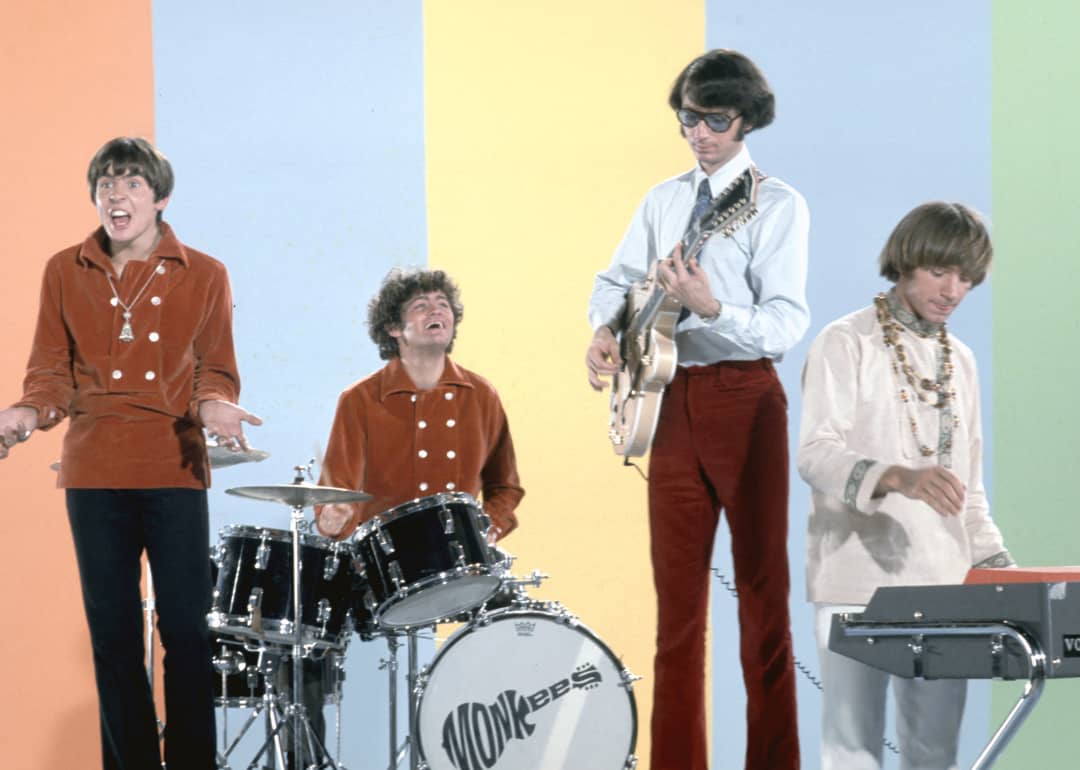
The Monkees in a portrait session with instruments. -The Monkees: Then
The Monkees formed in 1966, not from four musicians organically trying to form a band, but rather as four musician-actors on the set of a sitcom. The show, also titled "The Monkees," was a Hollywood experiment in creating the perfect '60s pop band. The studio auditioned hundreds of prospective musician-actors, including Stephen Stills, before casting Micky Dolenz, Michael Nesmith, Peter Tork, and Davy Jones as a band on the TV show.
The program was a hit, and so was the music produced by the Monkees and the show's songwriters. What began as a fictional band soon became real, however; the Monkees landed hits like "Daydream Believer" and "I'm a Believer" and took on a life beyond the show.
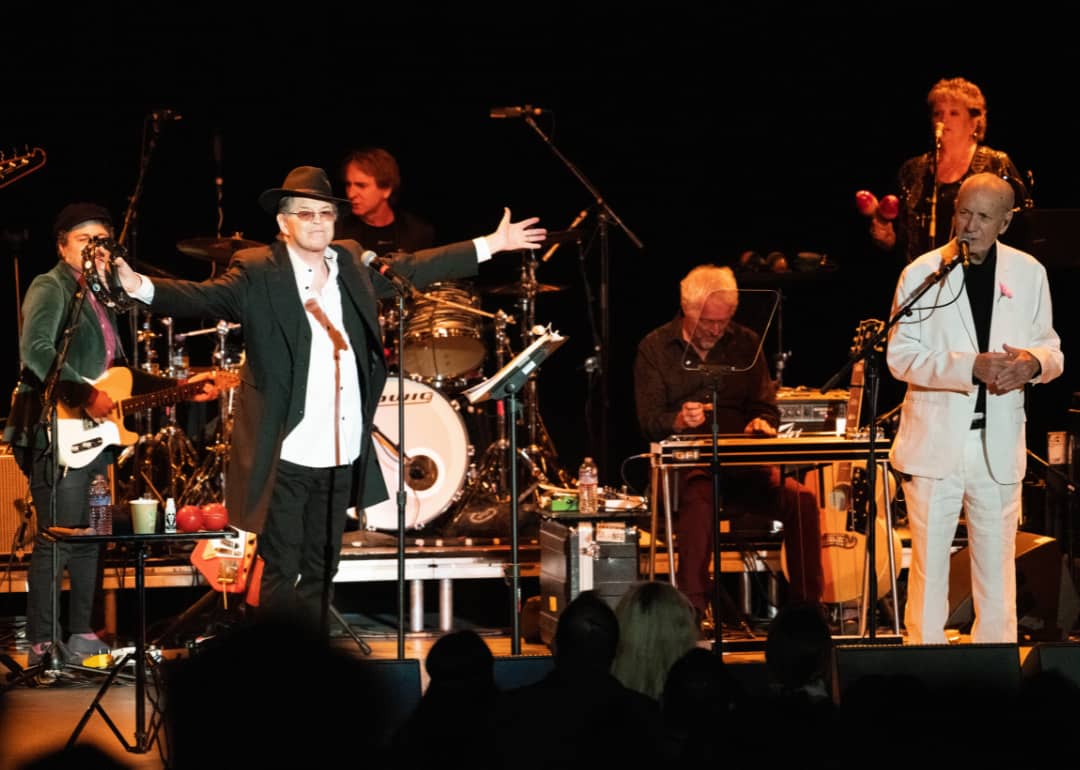
Micky Dolenz and Michael Nesmith perform onstage in 2021. -The Monkees: Now
Conflicts over the real members of the Monkees not being allowed actually to play on their recordings or write their music came to a head in the late '60s, and the band eventually won control over their own material. However, several band members had lost interest in the project by then and moved on to solo work. In 1968, the creators of "The Monkees" sitcom made the satirical movie "Head," which featured the Monkees in a bizarre series of misadventures. The film signified the end of the band's career as a Hollywood invention meant for teens—and as a real band.
Advertisement
Micky Dolenz, the last surviving Monkee, is still touring and discussing his time in the band.
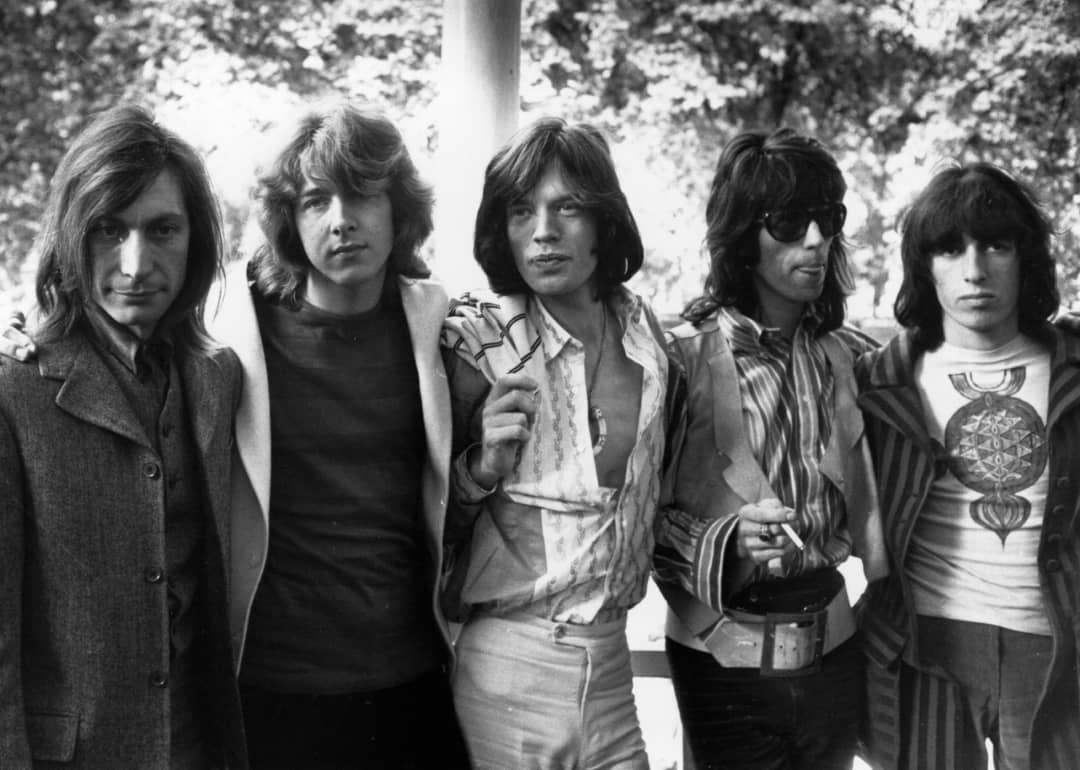
The Rolling Stones pose for a portrait in 1969. -The Rolling Stones: Then
This influential British rock band was founded in 1961 by Mick Jagger and Keith Richards, who had gone to primary school together. Jagger and Richards met Brian Jones and Ian Stewart in 1962, and this group took its name from one of their greatest musical inspirations, Muddy Waters—and more specifically, their tune "Rollin' Stone." After Bill Wyman and Charlie Watts joined in '63, the band began producing hits in earnest through the '60s and reached the peak of their fame by the end of that decade. The band stayed together through the '70s, despite their waning popularity.
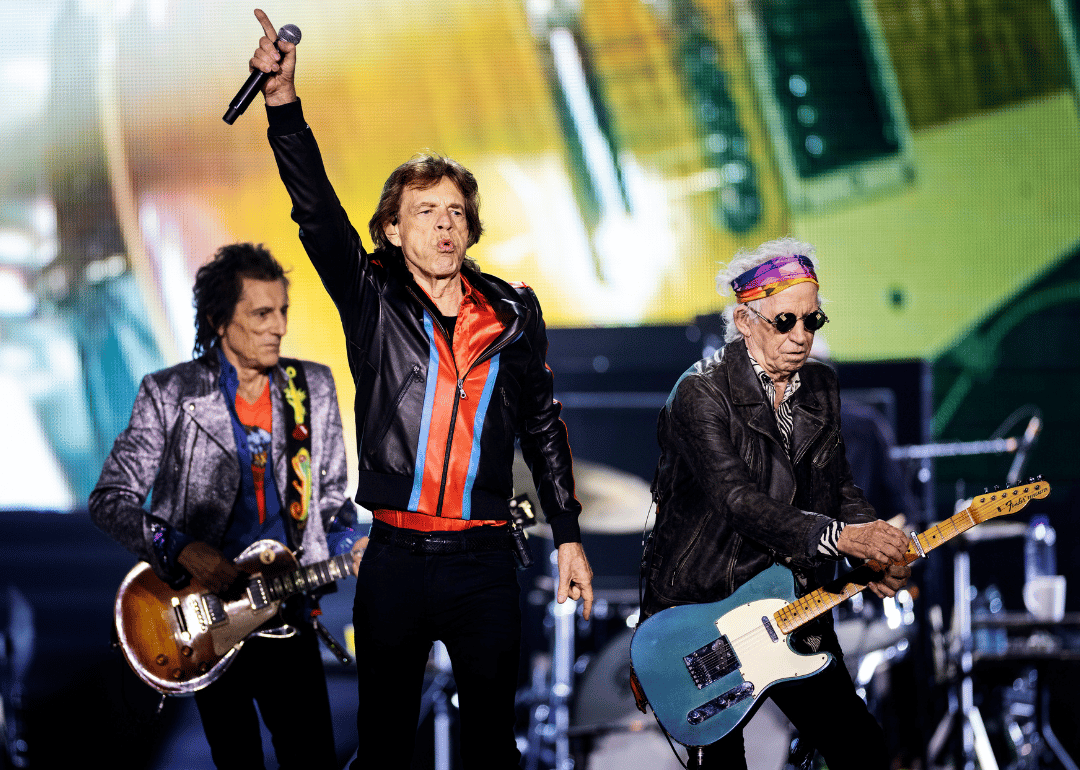
The Rolling Stones performing in 2022. -The Rolling Stones: Now
The Rolling Stones are still together and performing today despite many lineup changes and the loss of former members. Mick Jagger and Keith Richards, both around 80 years old, still front the band. Charlie Watts, one of the early members, played with the Stones for decades before dying in 2021. The Stones' latest album, "Foreign Tongues," hit shelves on July 10, 2026.
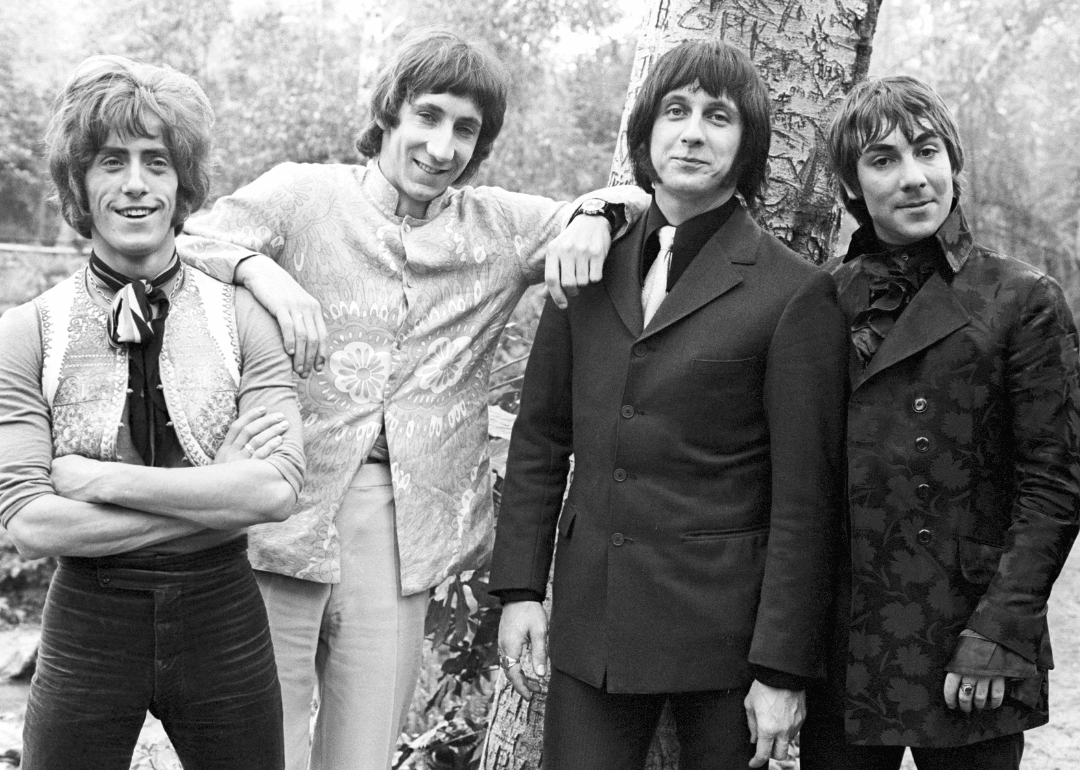
The Who pose for a portrait in Griffith Park. -The Who: Then
Pete Townshend and John Entwistle met in high school in London and joined a rock group called the Detours, along with Roger Daltrey, and later, Keith Moon. As the band got going, Townshend developed his playing style, which combined both rhythm and lead guitar, and the band landed gigs and, eventually, a record deal. They renamed themselves The Who and began touring, playing in the U.S. and gaining a global following. By the end of the '60s, albums like "Tommy" had cemented their place in the hard rock scene and made them pioneers of rock opera.
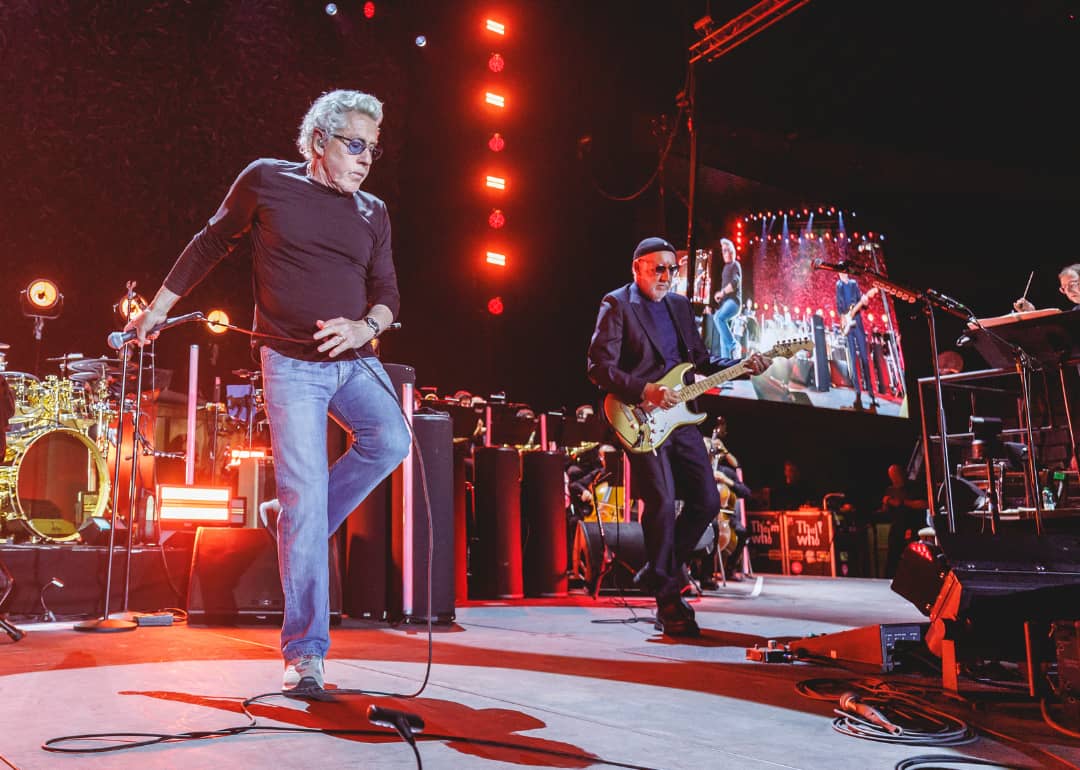
Roger Daltrey and Pete Townshend performing in 2023. -The Who: Now
By the '70s, the Who was beginning to fray, with substance use and the loudness of their performances beginning to take a toll on the bodies of the members. In 1978, the band's bombastic drummer, Keith Moon, died of an overdose. The remaining band members decided to continue, but the following year, after a trampling incident at one of their concerts in Cincinnati left 11 people dead, the group began the process of disbanding. Pete Townshend officially left the band in 1983, leading to its breakup. Roger Daltrey continued to have a successful solo career in music, but in 2025, he reunited with the rest of the Who for a North American farewell tour that wrapped with a final show in October 2025.
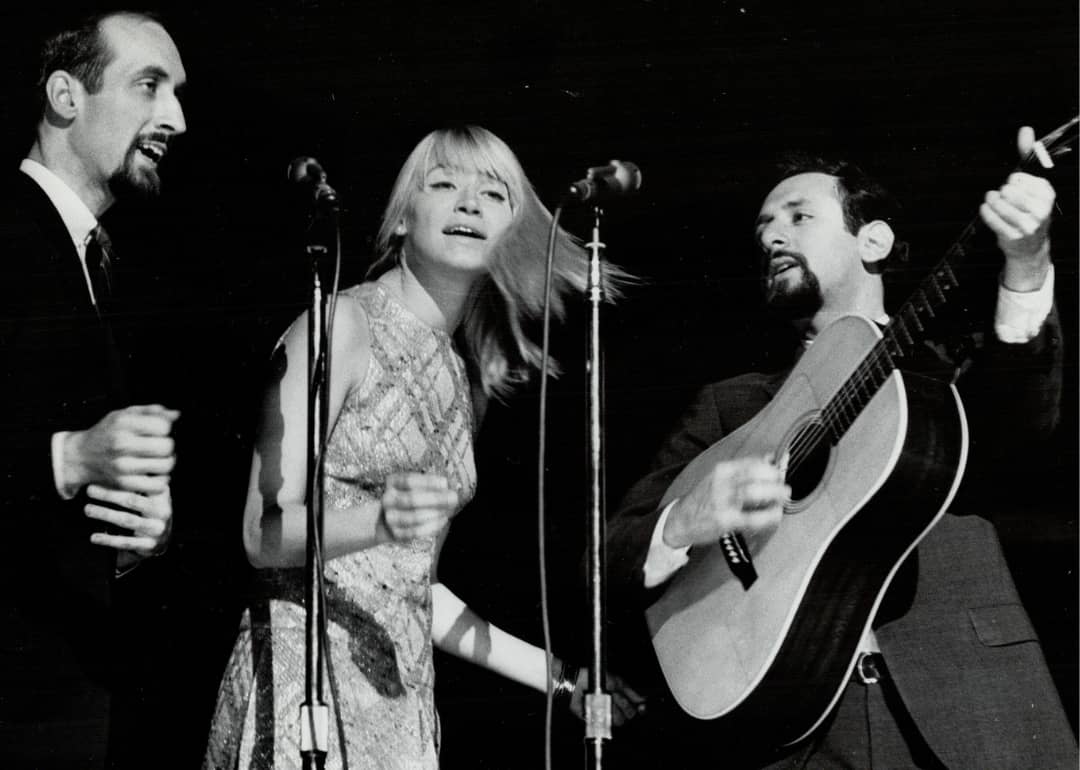
Peter, Paul and Mary performing. -Peter, Paul and Mary: Then
Peter Yarrow, Noel Paul Stookey, and Mary Travers met in New York City in the early '60s after music manager Albert Grossman brought them together. According to Stookey, the three met up in his apartment and sang the nursery rhyme "Mary Had a Little Lamb" in harmony, the only song all three of them knew. Their chemistry was instant, and in 1962 they released their first self-titled album, which was an immediate hit. Peter, Paul and Mary's folk sound defined the decade, with several additional albums becoming bestsellers.
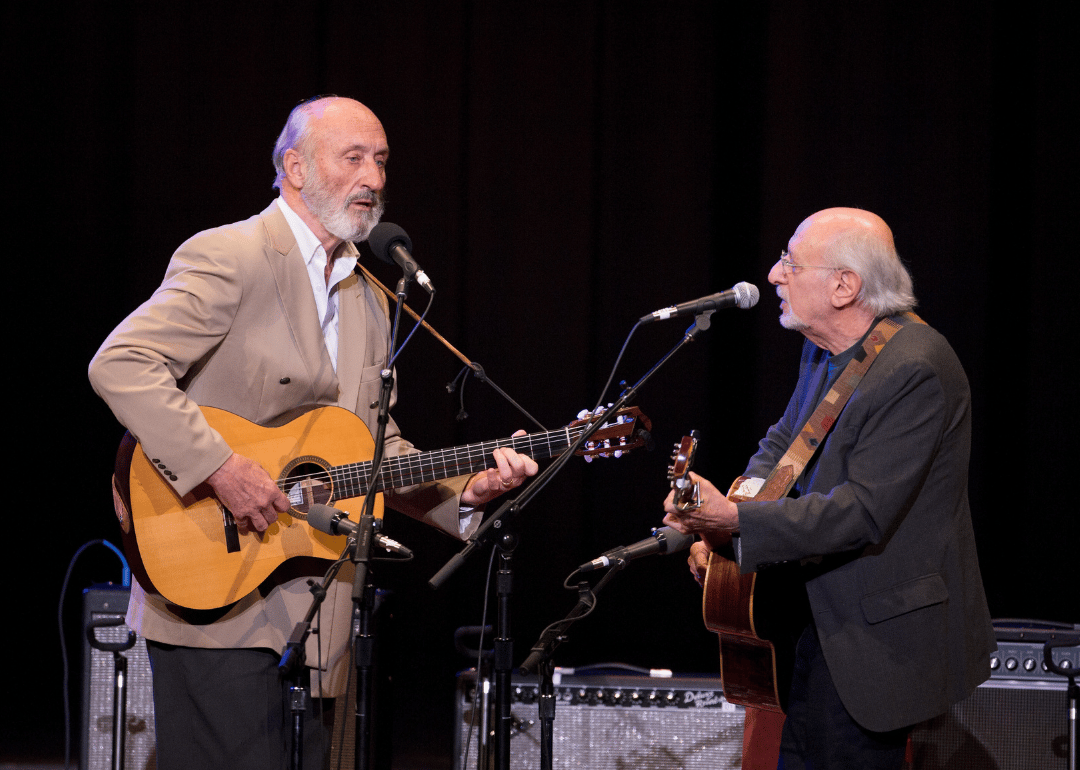
Peter Yarrow and Noel Paul Stookey perform at Kennedy Center in 2017. -Peter, Paul and Mary: Now
The band broke up fairly amicably in 1970, with each of its members itching to pursue solo careers. That same year, Peter Yarrow was sentenced to three months in jail for taking "indecent liberties" with a 14-year-old girl, a crime for which he would eventually be pardoned by President Jimmy Carter. Over the next several decades—though their solo careers did not reach the same levels of success as their combined efforts had—Peter, Paul and Mary came back together for reunion performances. Mary Travers died in 2009 from cancer, and Peter Yarrow died from cancer in January 2025. Noel Paul Stookey continues to perform, with dates scheduled through the fall of 2026.
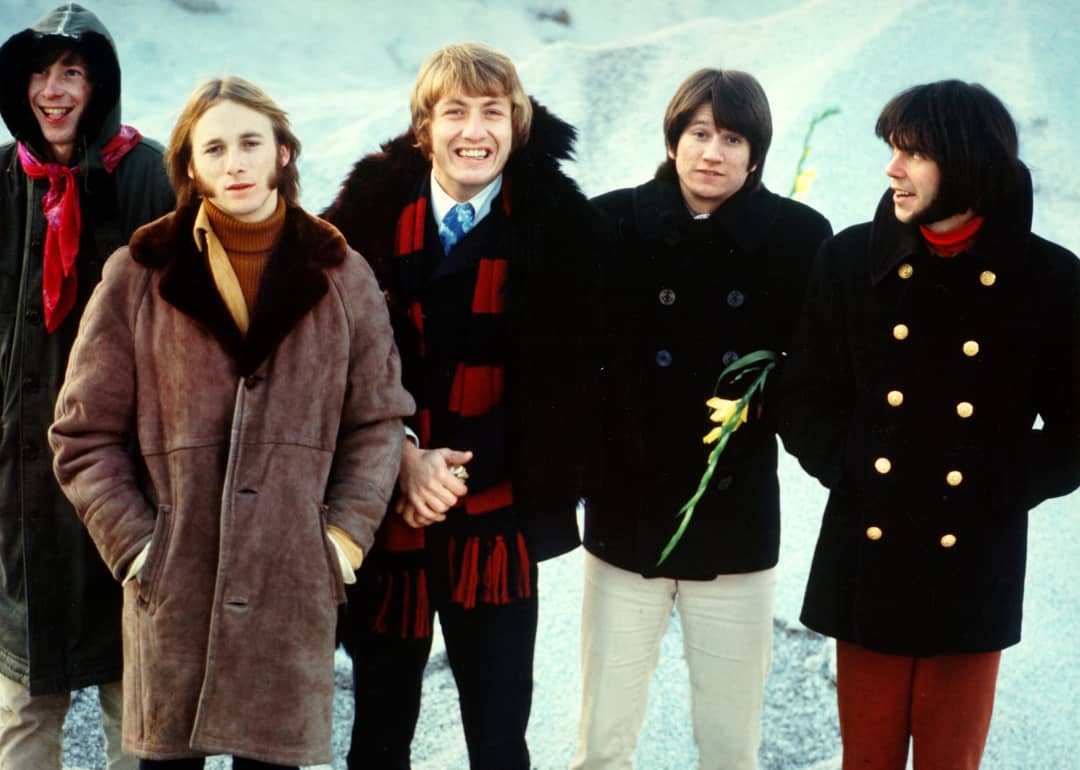
Buffalo Springfield pose for a portrait. -Buffalo Springfield: Then
This short-lived but star-studded band formed in the mid-'60s when Bruce Palmer and Neil Young came to Los Angeles hoping to run into Stephen Stills. After looking for him without any luck, Young and Palmer were about to leave for San Francisco when they spotted Stills with Richie Furay while stuck in traffic. After the chance encounter, they formed Buffalo Springfield soon after, with Dewey Martin completing the lineup. The group began releasing their iconic folk-rock music in 1966 and found early success with hits like "For What It's Worth."
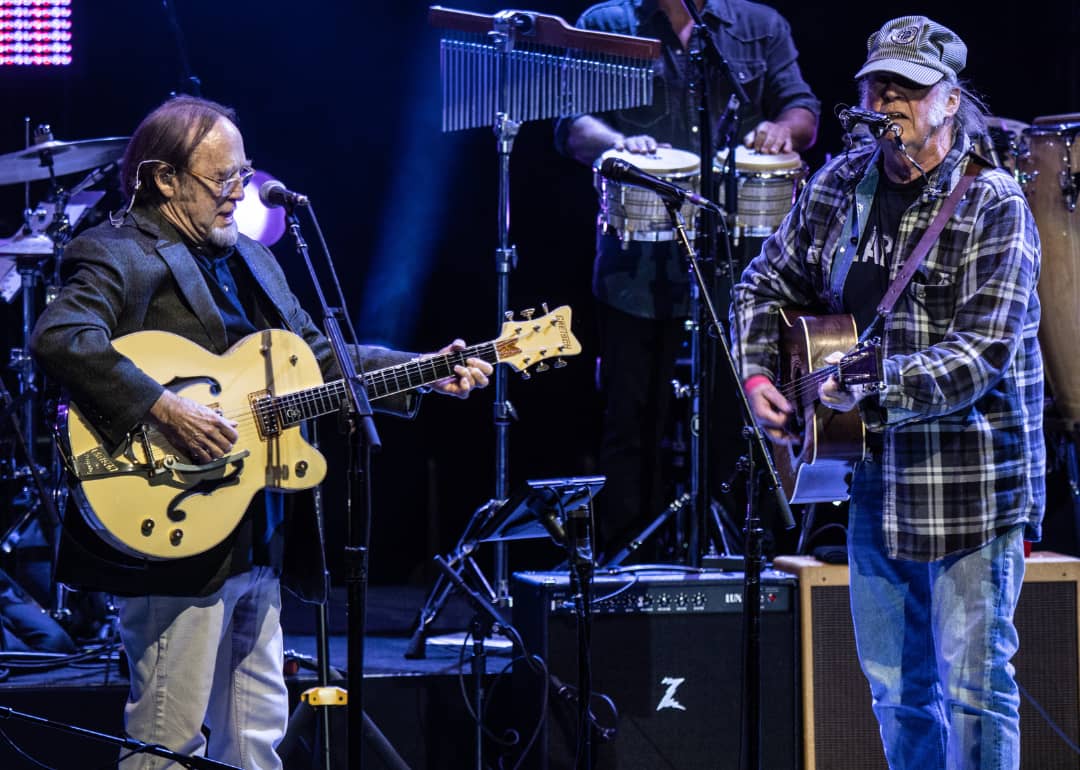
Stephen Stills & Neil Young performing in 2023. -Buffalo Springfield: Now
Buffalo Springfield hadn't been a band very long before complications began to arise. Bruce Palmer was arrested for marijuana and deported to his home country of Canada multiple times, leaving the group scrambling to find an alternate bassist. Other band members had run-ins with the police, and tensions were climbing between Stephen Stills and Neil Young, the latter who was frequently not participating in the band. Eventually, Young left to pursue his own music and the rest of the band broke up, leading Stills to start Crosby, Stills & Nash—a group which Young would later join. Bruce Palmer and Dewey Martin died in the 2000s.
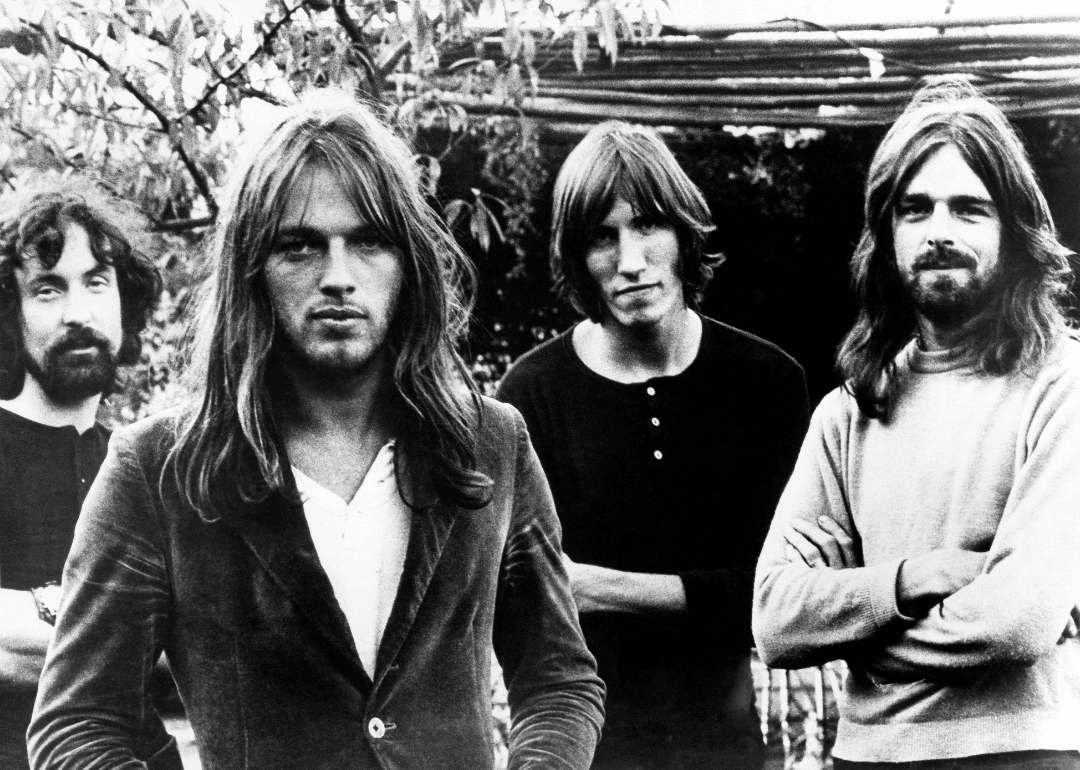
Pink Floyd pose for a portrait. -Pink Floyd: Then
The legendary British rock band Pink Floyd formed in London when Roger Waters, Nick Mason, and Richard Wright happened to meet while studying architecture at university in the '60s. The three started playing together and were joined by Waters' childhood friend Syd Barrett.
By 1967, the group had been signed to a label, but Barrett's mental health was suffering, and Pink Floyd recruited a new guitarist as his replacement, David Gilmour. By the late '60s and early '70s, the band was beginning to hit its stride, releasing successful albums including "Atom Heart Mother" and "Meddle." 1973's "The Dark Side of the Moon," however, redefined what success would look like for not only this band but for rock bands in general from that point forward.
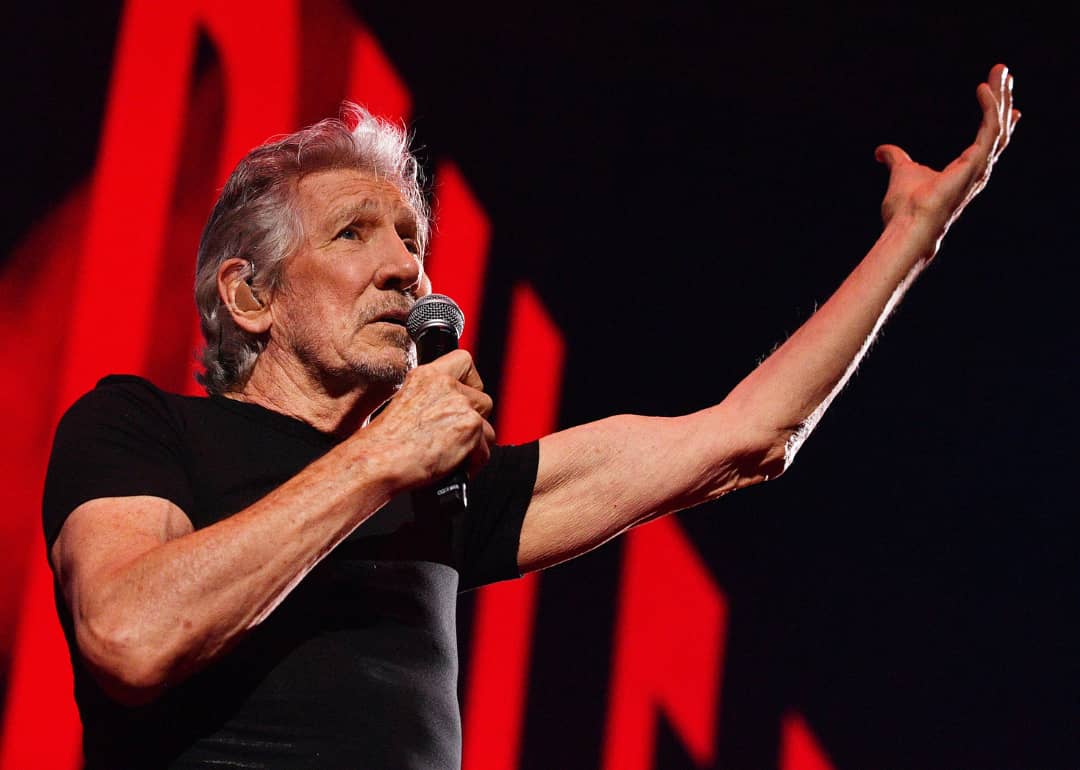
Roger Waters performs at The O2 Arena in 2023. -Pink Floyd: Now
By the end of the '70s, goodwill amongst the members of Pink Floyd was beginning to run out. Tensions between Roger Waters, who composed most of the band's music, and the other band members were high. Richard Wright left the band due to increasing conflicts, and Waters became increasingly alienated from the remaining group members as he tried to retain control. By the '80s, there was an ugly split, with Waters departing the group and the other members attempting to keep it going. Legal battles over the other members' continued use of the Pink Floyd name went on for years.
David Gilmour continues to perform today, though he dashed hopes for a potential reunion with Roger Waters in an October 2024 interview with The Guardian. Fans can at least enjoy their respective careers, with both releasing live albums in 2025—Waters' "This Is Not a Drill" hit stores in July 2025, and Gilmour's "The Luck and Strange Concerts" was released in October 2025.
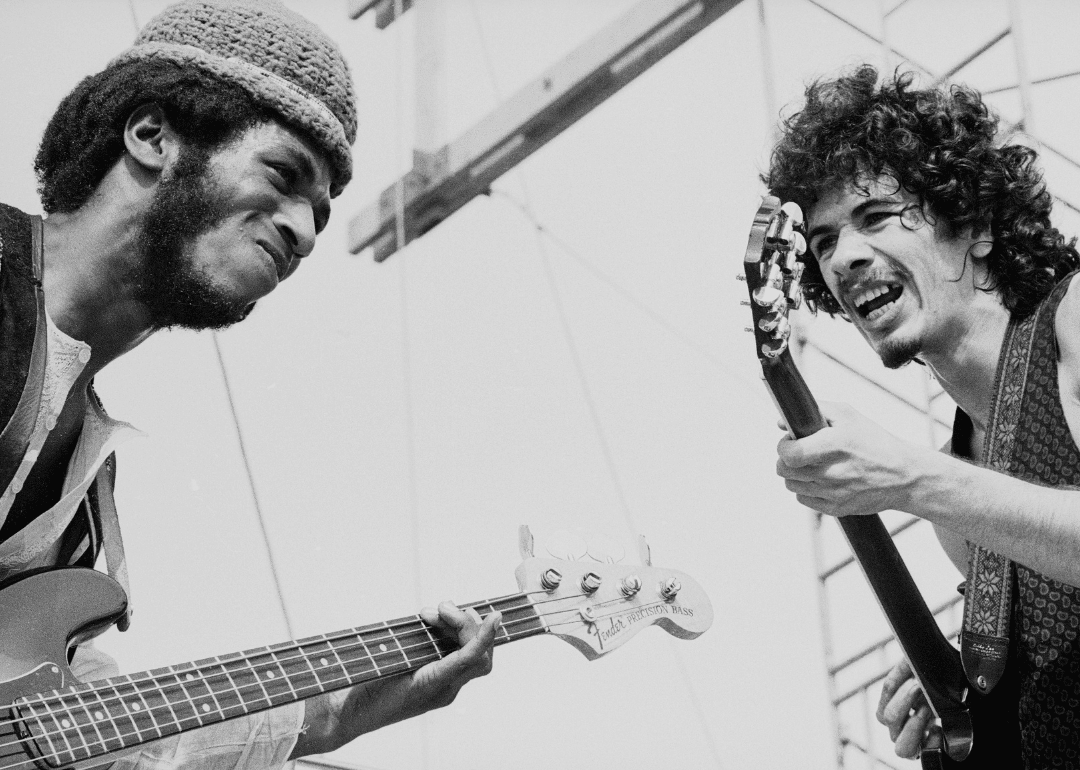
Santana performing at Woodstock. -Santana: Then
Formed in 1966 by Mexican guitarist Carlos Santana, the band simply named "Santana" navigated some initial roadblocks—including getting fired for being late, a health scare, and several iterations of players—before settling on a lineup that drove the band to stardom. Santana played Woodstock in 1969 and recorded several successful albums by the late '60s and early '70s, bringing Latin rock into the mainstream.
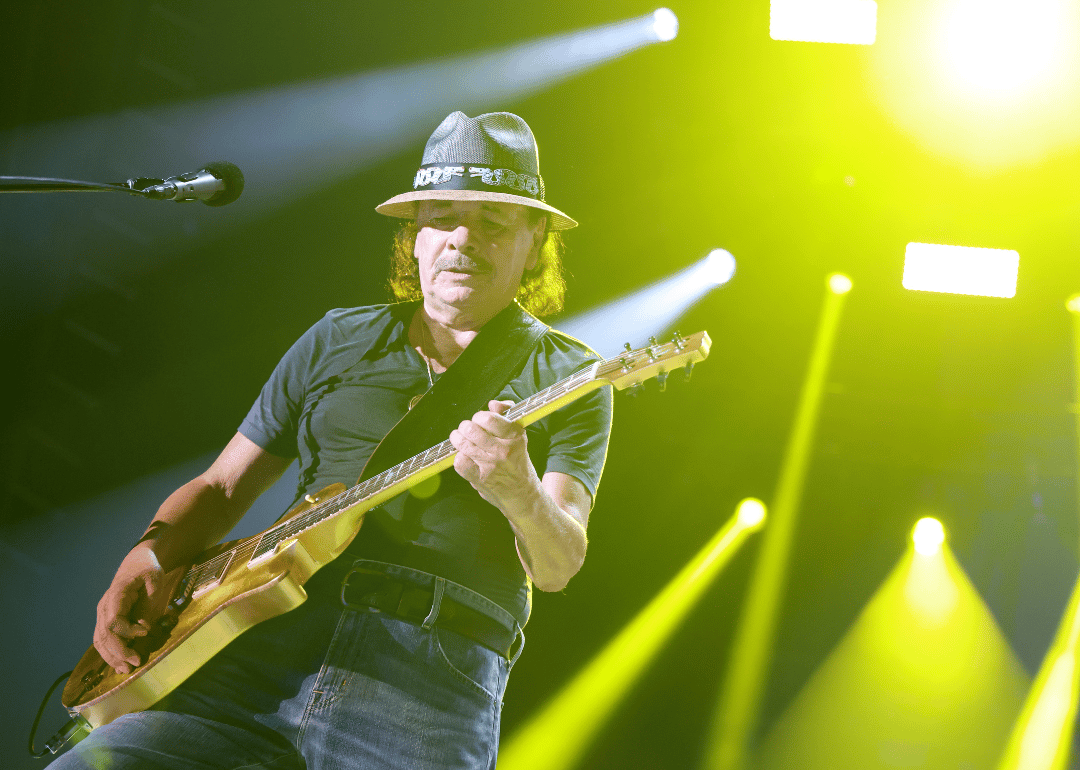
Carlos Santana performing in concert in 2023. -Santana: Now
In the early '70s, Carlos Santana's musical vision moved increasingly towards jazz and avant-garde fusion and away from the commercially successful rock tunes the band had found early success with. By 1976, however, Santana's sound returned to its roots, and the band was back in the spotlight. Today, Carlos Santana still performs while in his 70s, albeit with a frequently changing lineup of players.
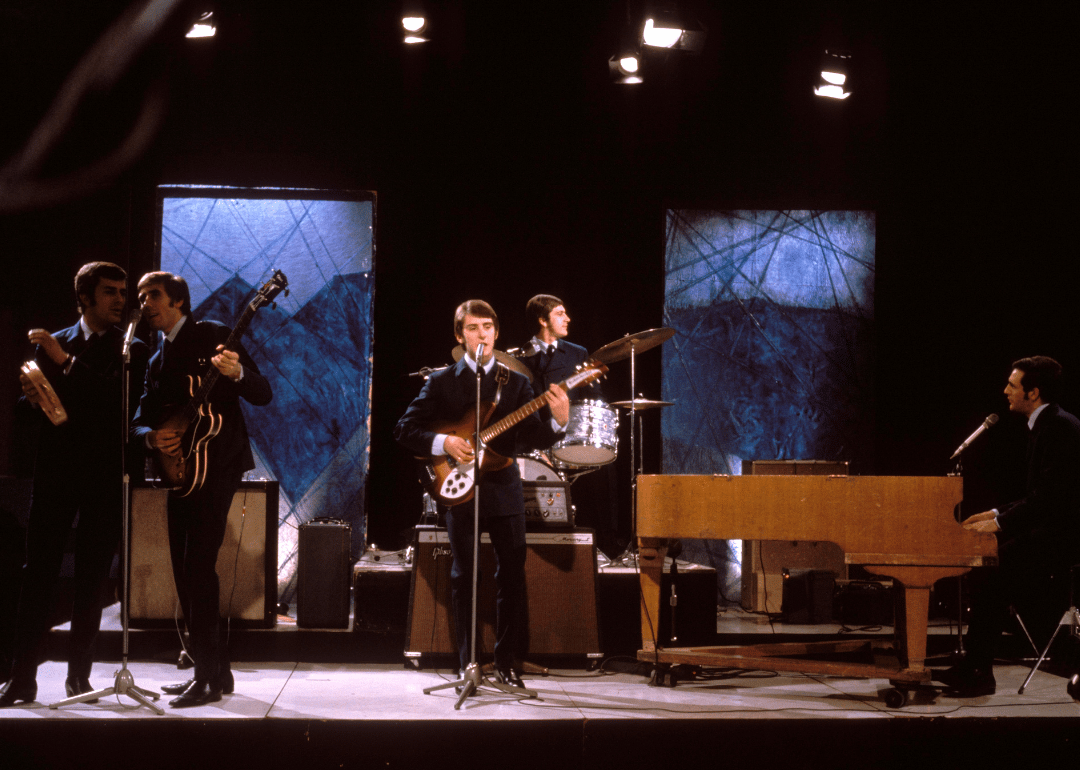
The Moody Blues performing on ‘Ready Steady Go’. -The Moody Blues: Then
This British rock band came together in 1964 and was composed of Mike Pinder, Ray Thomas, Clint Warwick, Graeme Edge, and Denny Laine under the name M & B Five, which would eventually become The Moody Blues. Laine and Warwick left in '66 and were replaced by John Lodge and Justin Hayward. Over the decade the group was together, it produced several highly successful psychedelic rock albums, including "In Search of the Lost Chord," "On the Threshold of a Dream," and "A Question of Balance."
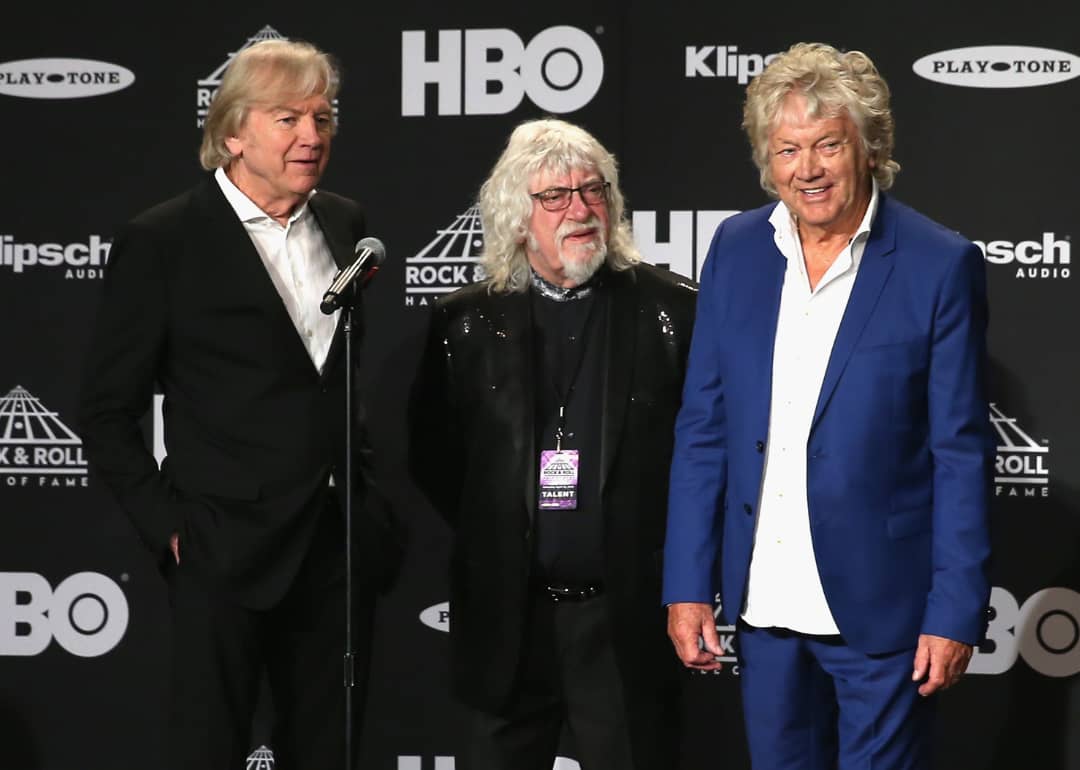
Justin Hayward, John Lodge and Graeme Edge at the Rock and Roll Hall of Fame in 2018. -The Moody Blues: Now
The band parted ways in 1974 but reunited a number of times over roughly 50 years, most recently in 2018. Edge and Thomas died within a few years of each other, and Pinder passed away in April 2024. John Lodge and Justin Hayward have continued performing as solo artists, though as of June 2024, Hayward says that the two have no plans to reunite and perform as The Moody Blues.
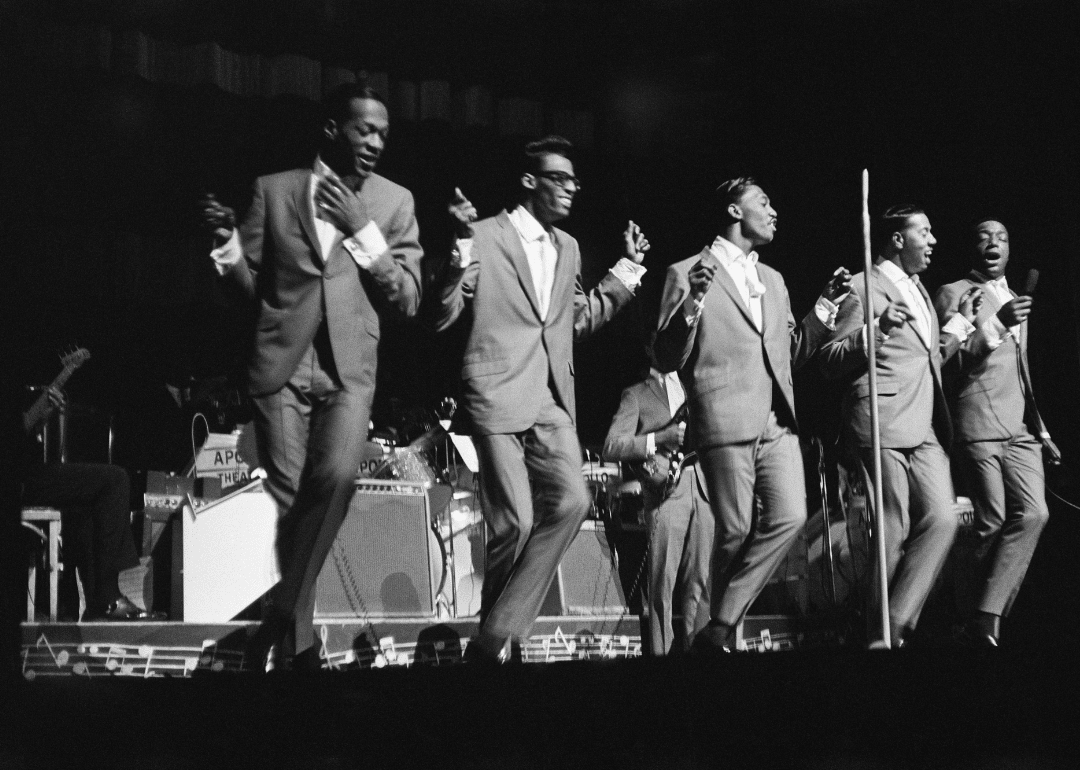
The Temptations perform onstage at the Apollo Theater. -The Temptations: Then
The Temptations formed in Detroit in 1961 and were signed by Motown. The group consisted of Otis Williams, Melvin Franklin, Eddie Kendricks, Paul Williams, David Ruffin, and Dennis Edwards. The band quickly made waves with its perfectly balanced harmonies and soul sound, and scored a number of hits including "Ain't Too Proud to Beg," "Get Ready," "My Girl," "Papa Was a Rollin' Stone," and "I Wish It Would Rain."
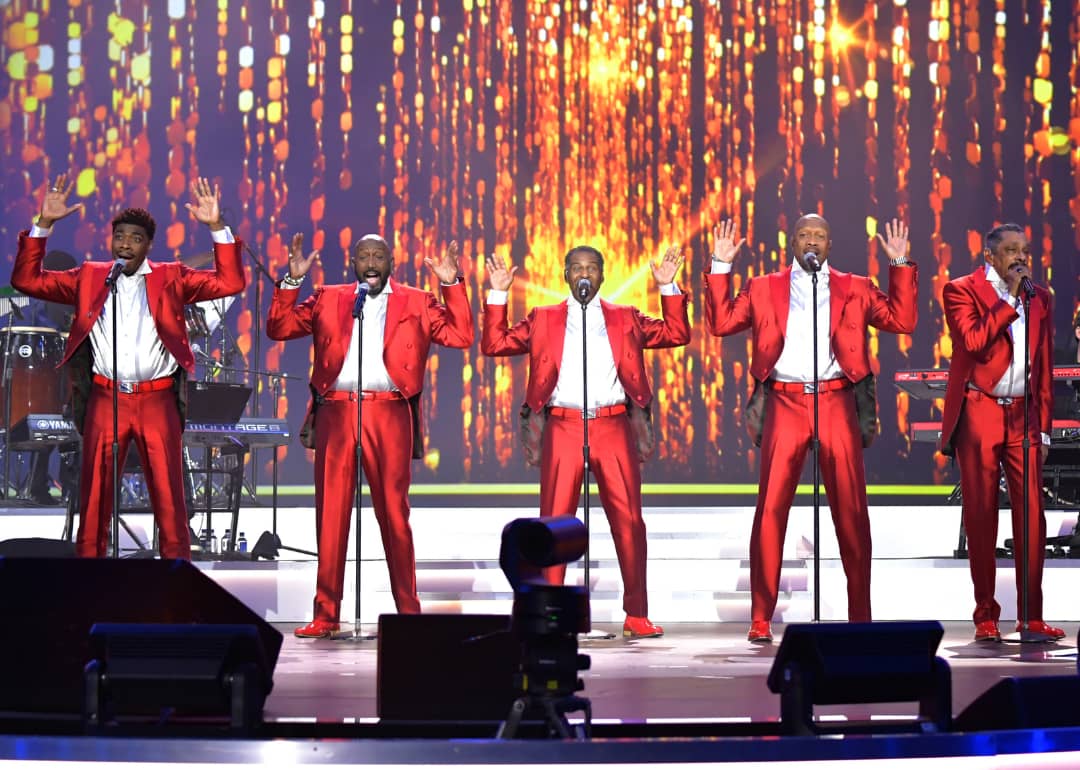
Jawan M. Jackson, Otis Williams, Terry Weeks, Tony Grant, and Ron Tyson performing in 2023. -The Temptations: Now
By the late '70s, some members of the Temptations were beginning to leave, and the band switched labels from Motown Records over to Atlantic while trying to shift their sound to appeal to the burgeoning disco craze. The group stayed together, though the lineup changed considerably over the '80s. In the early '90s, Ruffin, Kendricks, and Franklin all tragically died within a couple of years of each other. Today, Otis Williams, who owns the Temptations' name, still performs with a new lineup—in 2024, the group celebrated the 60th anniversary of "My Girl," which reached a billion streams on Spotify in the same year.
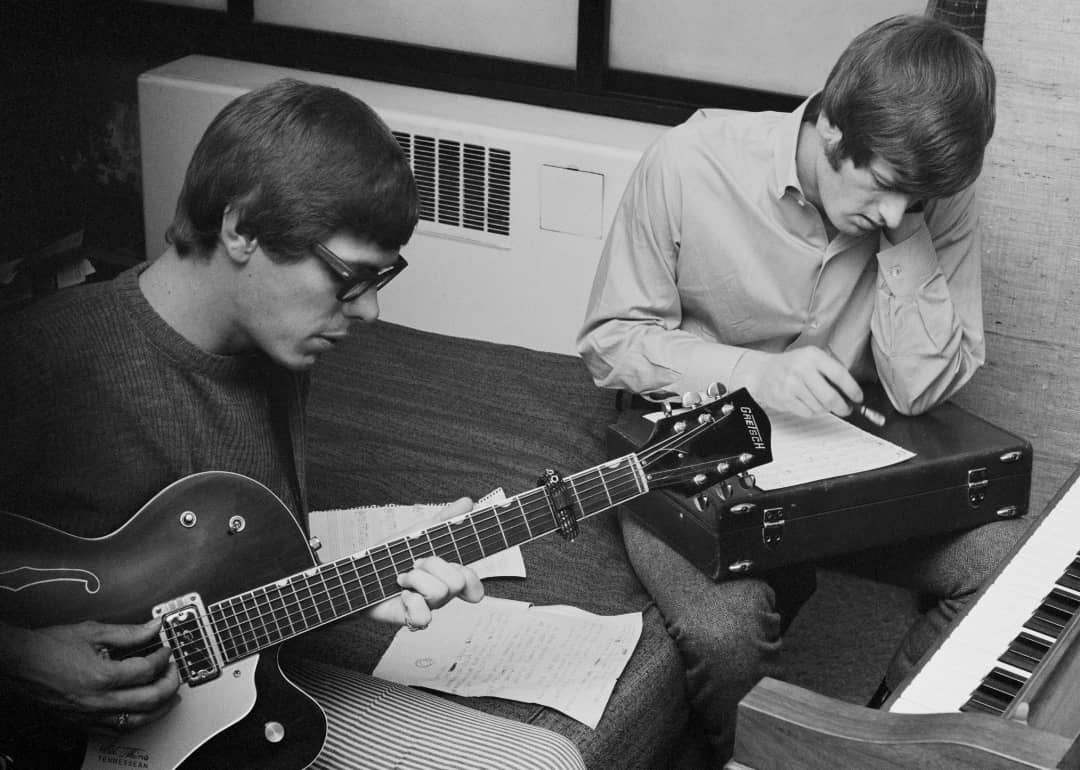
Russ Giguere and Jim Yester at a recording session. -The Association: Then
The sunshine pop group the Association formed in Los Angeles in 1965; its initial lineup of six members included Jules Alexander, Terry Kirkman, Ted Bluechel Jr., Brian Cole, Russ Giguere, and Jim Yester. Though all the band members played instruments, they were set apart by the fact that they were all also vocalists, and frequently switched off singing the lead. Hit songs included "Never My Love" and "Along Comes Mary."
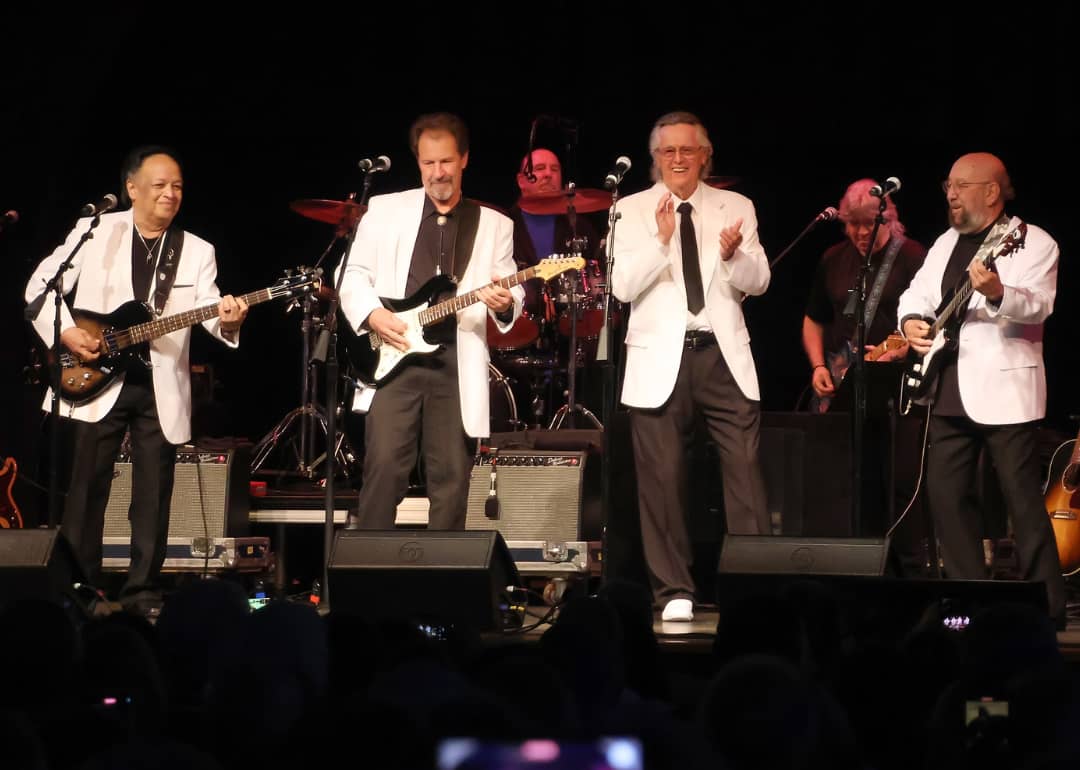
Del Ramos, Paul Holland, Jim Yester and Jules Alexander of The Association performing in 2022. -The Association: Now
Band members came and went as the '70s wore on, with original members of the Association swapping out with new members, only to occasionally return. The band is still performing today, with Jules Alexander and Jim Yester as the only remaining founding members. Terry Kirkman passed away in September 2023 at the age of 83.
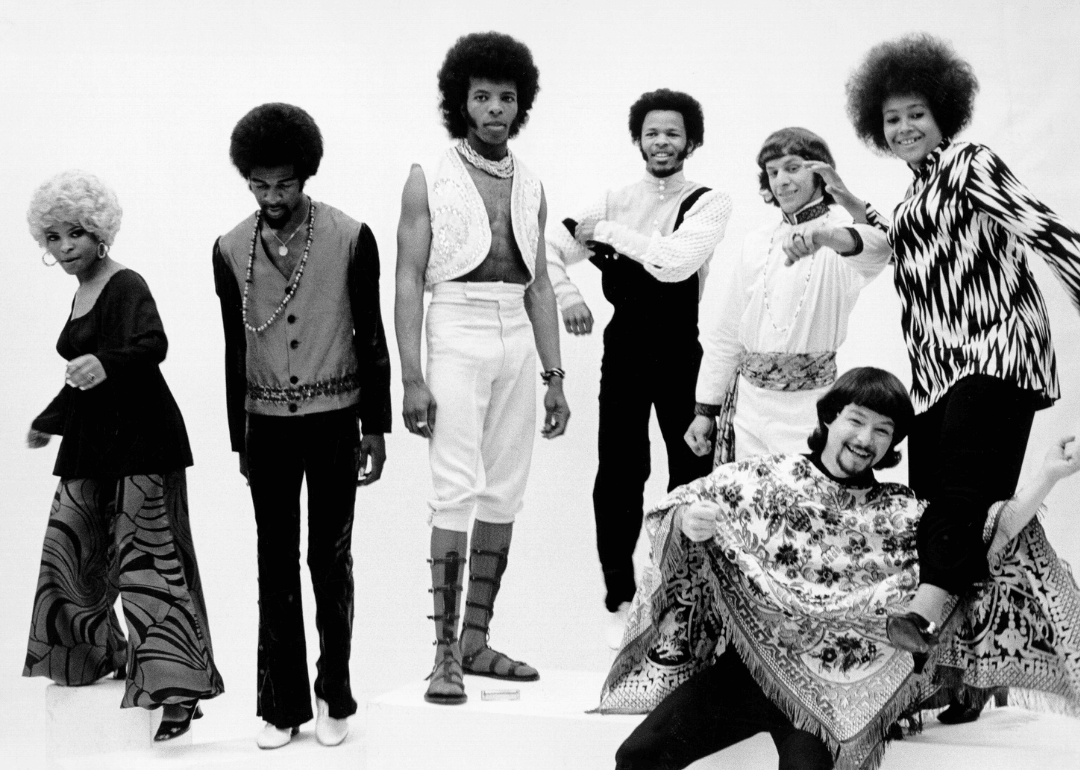
Sly & The Family Stone pose for a portrait in 1968. -Sly and the Family Stone: Then
Sly and the Family Stone formed in San Francisco in 1966 when siblings Sylvester, Freddie, and Rose Stewart joined forces with Greg Errico, Cynthia Robinson, Jerry Martini, and Larry Graham. The first band to have a racially integrated lineup that included male and female members, the band became a sensation by 1968 with its first hits "Dance to the Music" and "Everyday People." Sly and the Family Stone's funk-soul sound redefined pop music of the time, and the band continued innovating into the '70s.
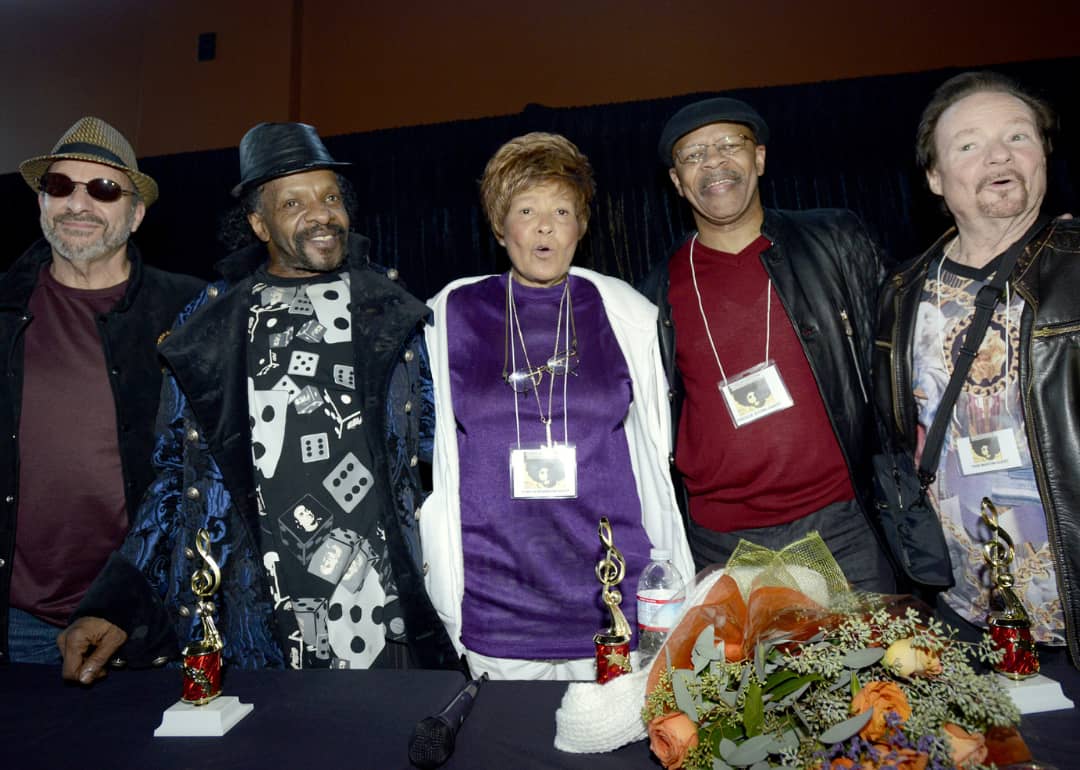
Greg Errico, Sly Stone, Cynthia Robinson, Freddie Stone, and Jerry Martini in 2015. -Sly and the Family Stone: Now
By the early to mid-'70s, the band was beginning to experience internal conflicts resulting from substance use, violence, and missed performances. In 1975, the band broke up, and Sly mostly disappeared from the public eye, though many of the other band members continued their music careers. The reclusive Sly released a memoir in October 2023 that detailed his time with the band and some of his personal battles in the years since. His story even got the movie treatment with a documentary on Hulu titled "Sly Lives!" from Questlove, which was released in February 2025. Sadly, Sly died on June 9, 2025, from COPD and other health issues.
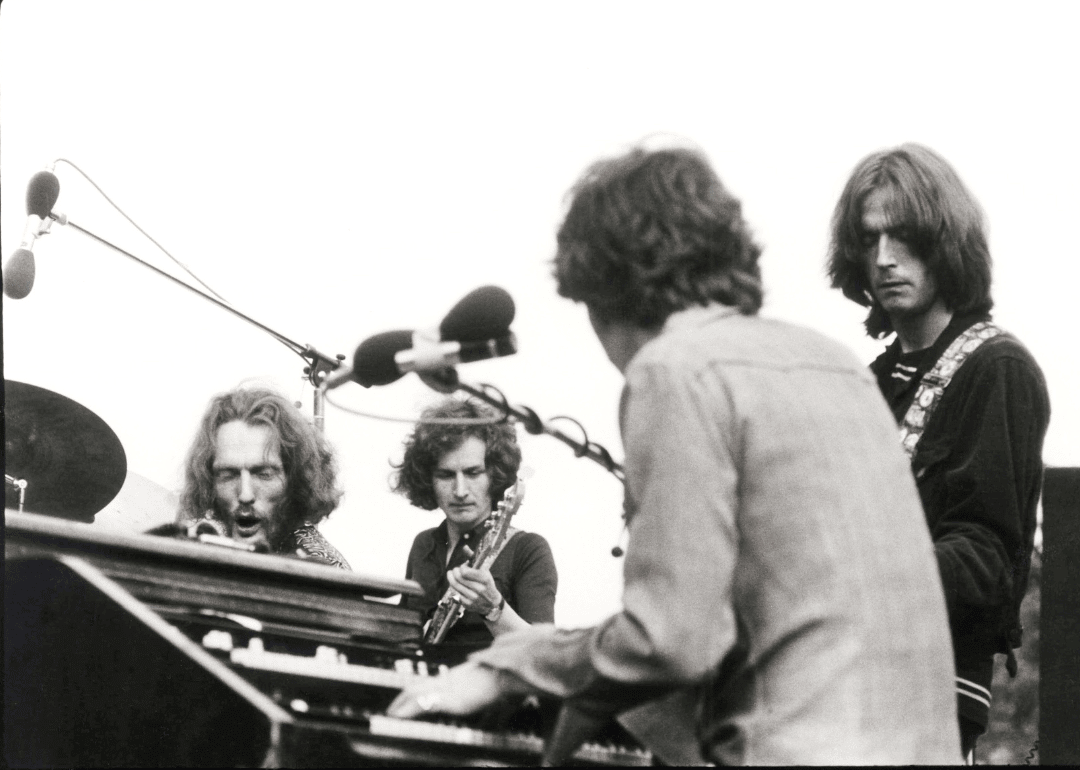
Blind Faith performing in Hyde Park. -Blind Faith: Then
In 1969, the dissolution of the bands Cream and Traffic led to the formation of Blind Faith, a British supergroup featuring Eric Clapton, Ginger Baker, Steve Winwood, and Ric Grech. To call the band short-lived would be an understatement—it lasted less than a year, in which time the group released one album. That album, also called "Blind Faith," was a massive success, topping charts in both the U.S. and the U.K.
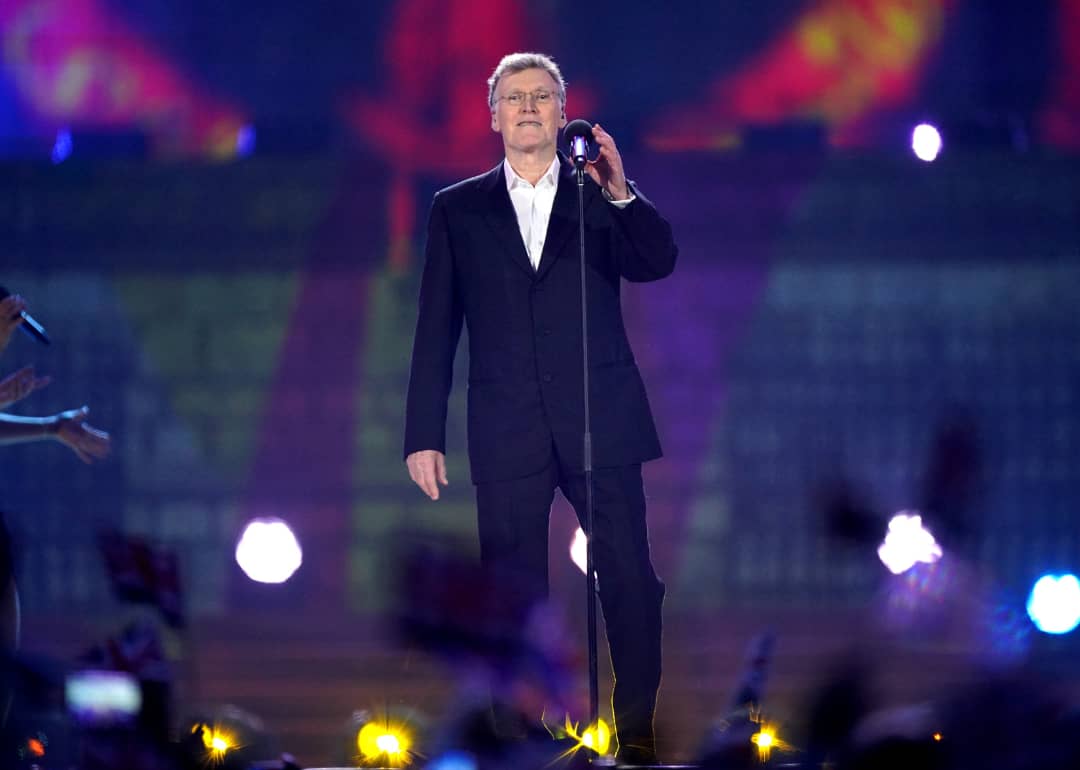
Steve Winwood performing during the Coronation Concert in 2023. -Blind Faith: Now
According to Winwood, the band was doomed from the start due to Ginger Baker's erratic and sometimes violent behavior. The album cover also presented problems for the band, as it featured a photo of a topless 11-year-old girl, Mariora Goschen, sparking controversy. Goschen later reported that she was coerced into taking the photo. Shortly after Blind Faith formed, the band broke up, with its members going on to work on other projects. Baker passed away in 2019 at the age of 80. Meanwhile, Clapton continues to tour, and Winwood embarked on his first North American headlining tour since 2018 in September 2025.
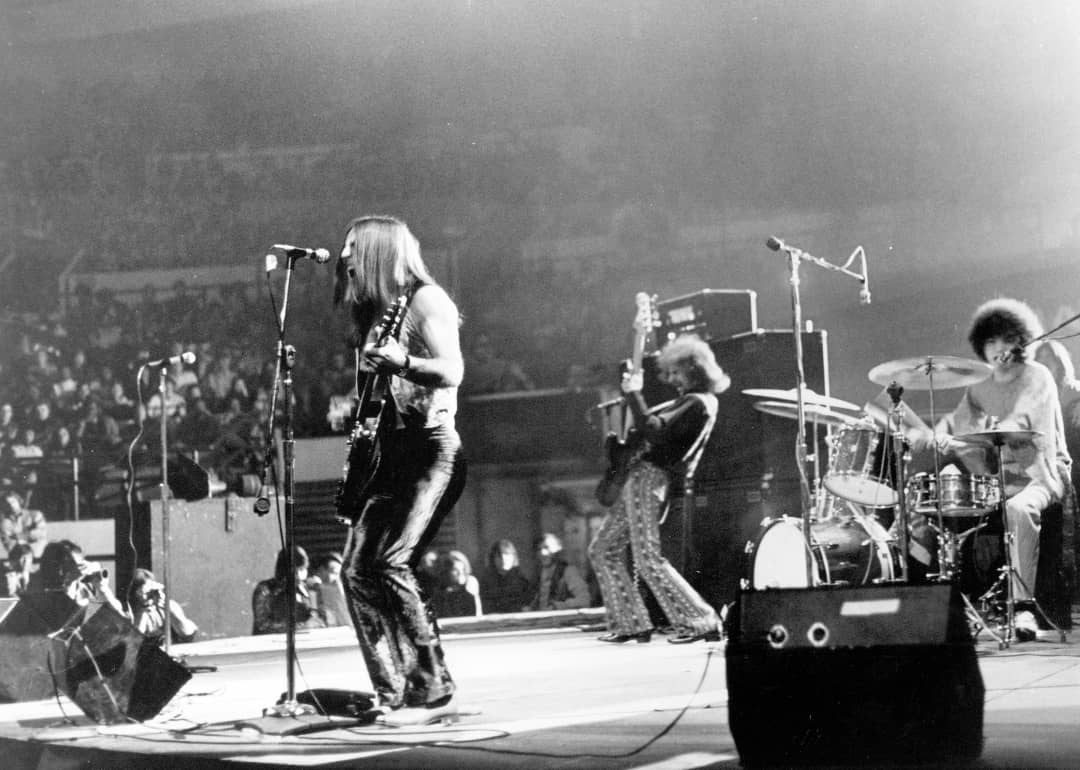
Grand Funk Railroad performing live. -Grand Funk Railroad: Then
Grand Funk Railroad released its first album, "On Time," in 1969. Consisting of Mark Farner, Mel Schacher, and Don Brewer, this often-forgotten heavy rock band formed in Flint, Michigan. The band's energetic performance at the Atlanta Pop Festival got them a record deal with Capitol Records, and it went on to record several bestselling albums over the next several years.
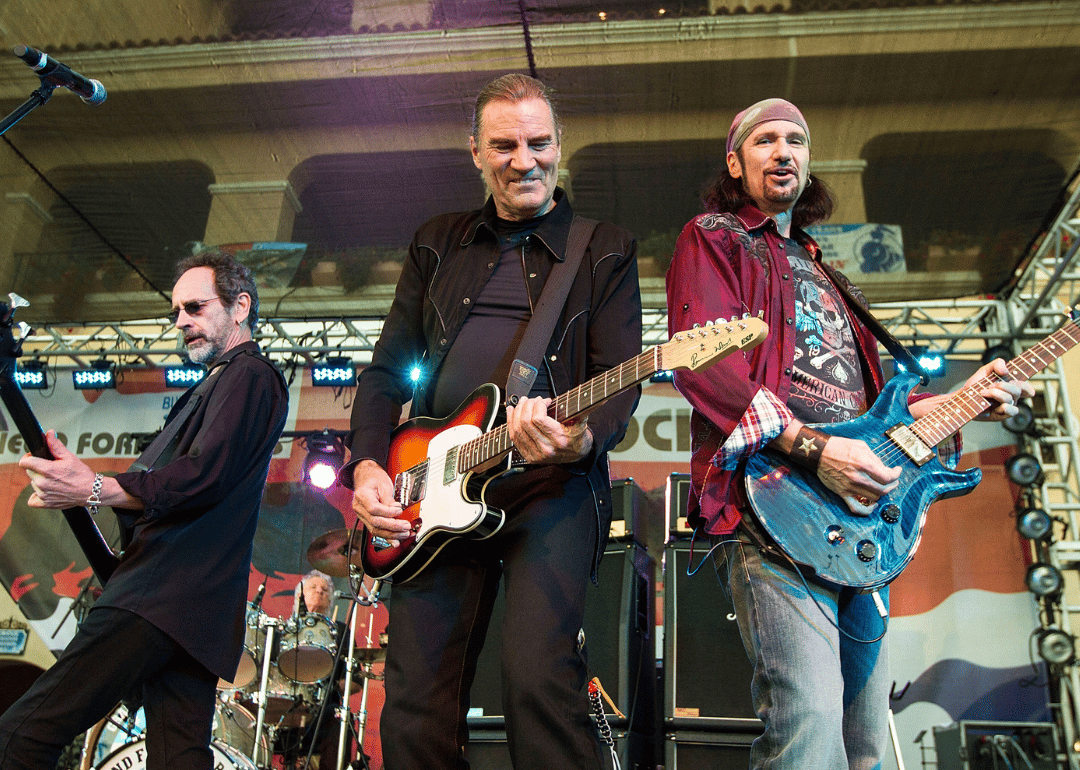
Mel Schacher, Max Carl, and Bruce Kulick perform in 2014. -Grand Funk Railroad: Now
In 1976, Grand Funk Railroad broke up over disagreements among the members and conflict with manager Terry Knight. Though the group reunited several times over the following years, releasing a few more albums, these releases did not recapture the band's earlier success. Still, Grand Funk Railroad continues to perform together across the U.S. today.
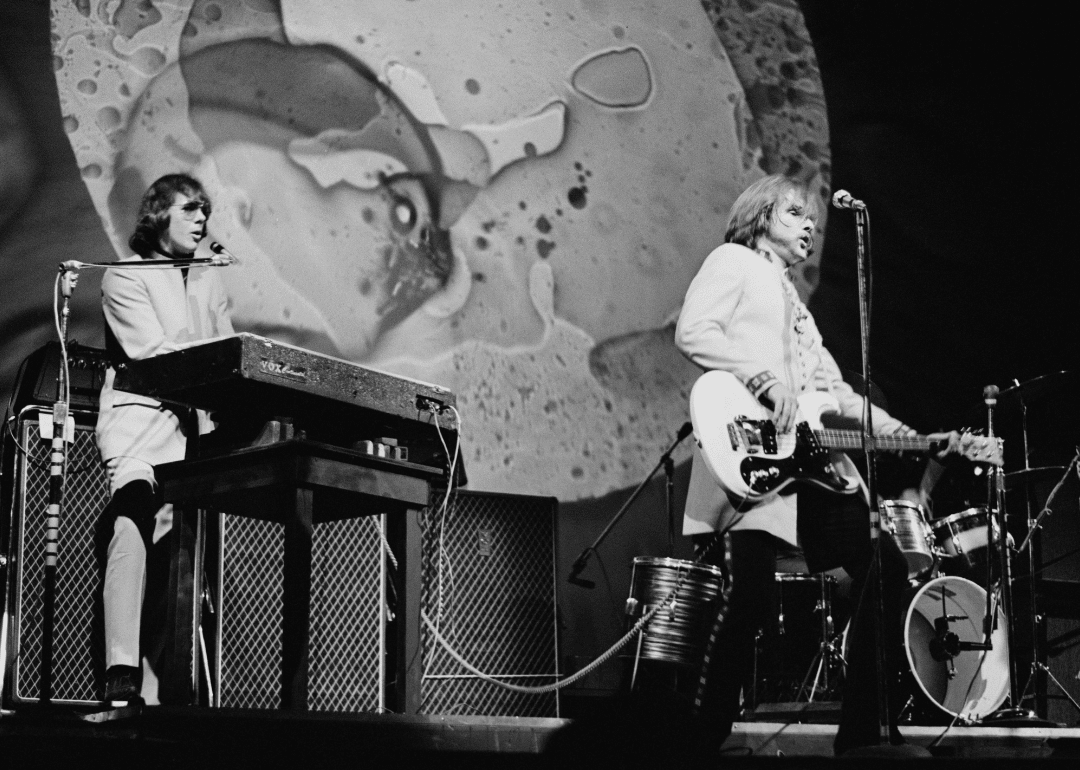
Iron Butterfly performing live. -Iron Butterfly: Then
The San Diego-based group formed in 1966 when Doug Ingle, Jack Pinney, Greg Willis, and Danny Weis played together as the house band for a club called Palace. Within the early days of the band's formation, several of the founding members were swapped out for what would become the band's most well-known lineup, consisting of Doug Ingle, Ron Bushy, Lee Dorman, and Erik Brann. The band met its greatest success with its sophomore album "In-A-Gadda-Da-Vida," a mishearing of "In the Garden of Eden"—the 17-minute title track was edited down for the radio, and that version became a hit.
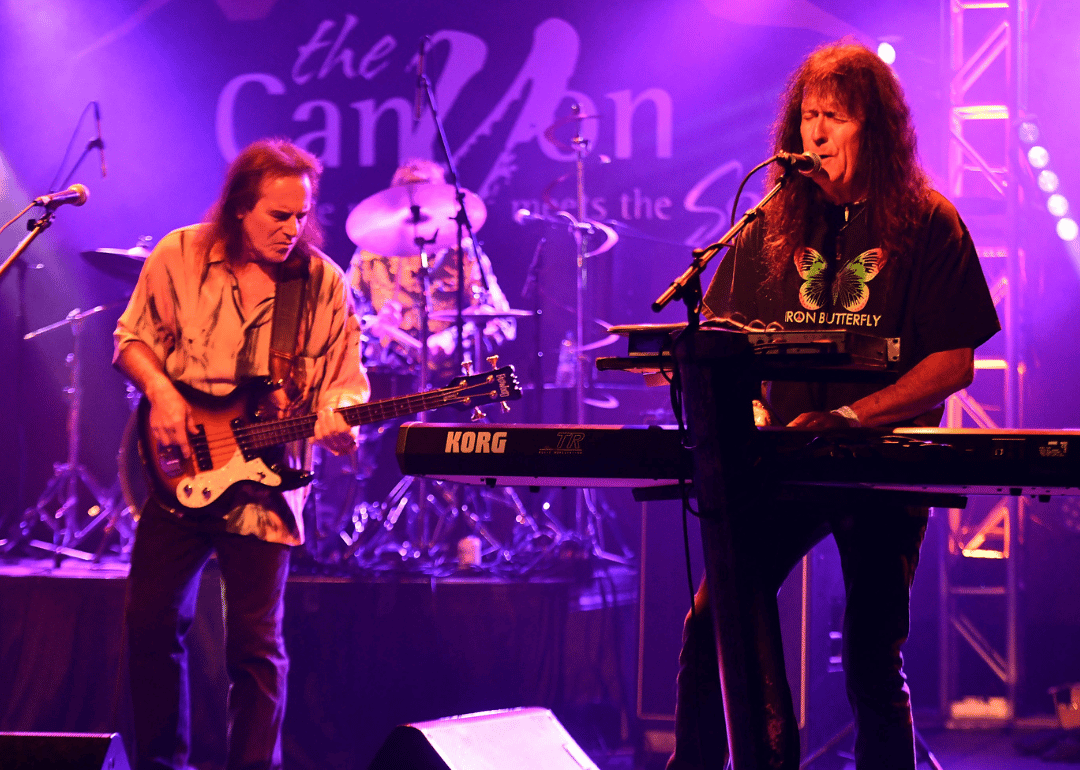
Dave Meros and Martin Gerschwitz of Iron Butterfly perform live in 2018. -Iron Butterfly: Now
Though Iron Butterfly stopped releasing new music in 1975, the group continues to perform together. All members of the band's "classic" lineup have passed away as of May 2024, when singer and organist Doug Ingle died at the age of 78. Nevertheless, Iron Butterfly performed as recently as April 2026.
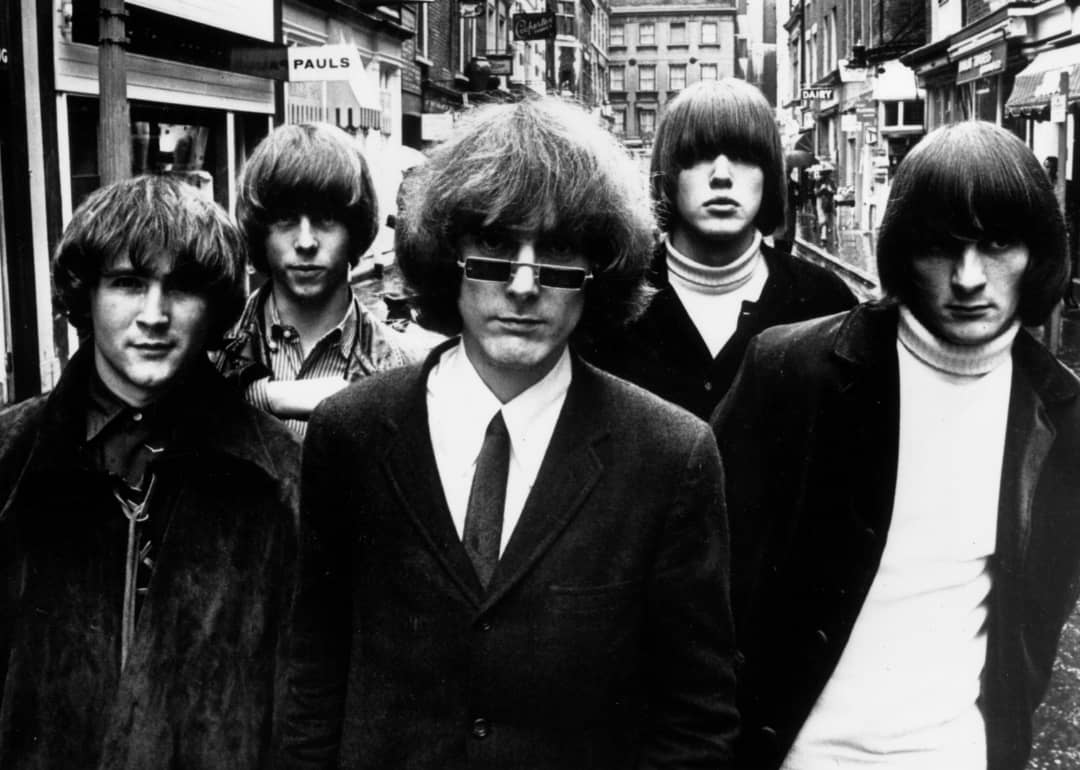
The Byrds pose for a portrait in London in 1965. -The Byrds: Then
The Byrds formed in Los Angeles in 1964 and included members Jim (Roger) McGuinn, Gene Clark, David Crosby, Chris Hillman, and Michael Clarke. The band pioneered the folk-rock genre with covers like "Mr. Tambourine Man" and "Turn! Turn! Turn!" but the group's sound shifted towards then-popular psychedelic rock, causing rifts in the band that would lead Clark, Clarke, and Crosby to leave voluntarily or be fired a few years later.
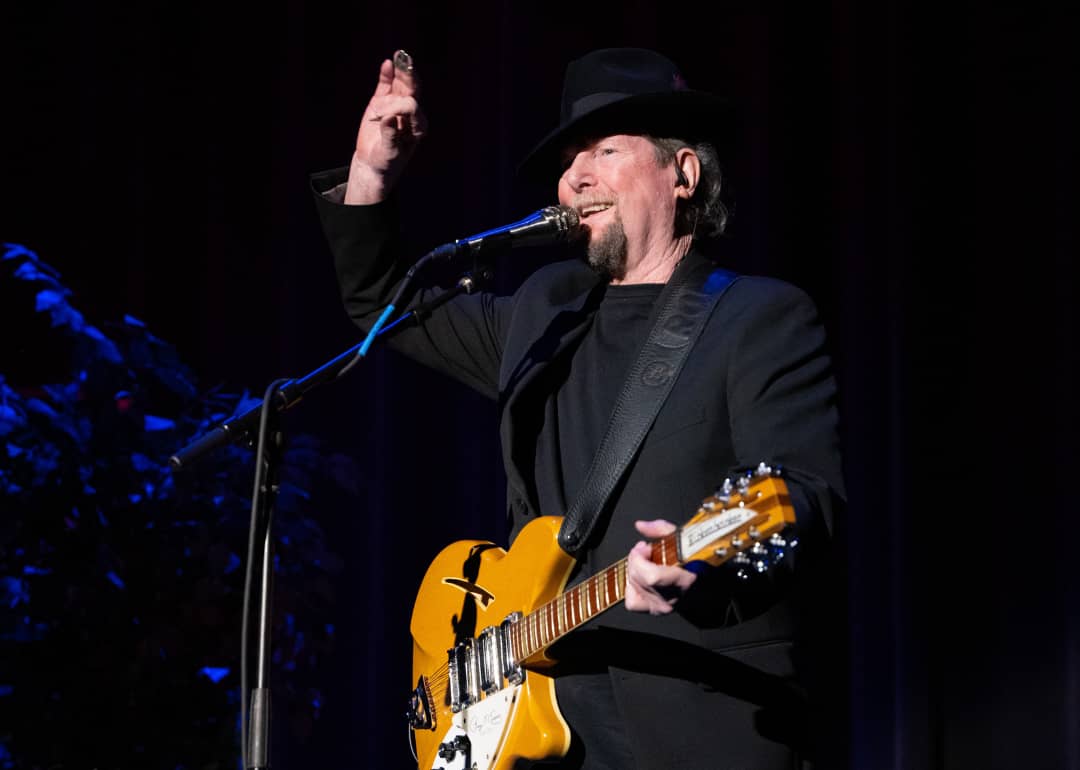
Roger McGuinn performing live in 2022. -The Byrds: Now
Despite the departures of three key band members, the Byrds continued to produce hits, including the album "The Notorious Byrd Brothers," well into the early '70s. In 1973, the group disbanded, though reunions continued up until 2000. Both Clark and Clarke died in the early '90s. Roger McGuinn regularly reflects on his past, including as frontman of the Byrds, and he has concert dates scheduled through October 2026.
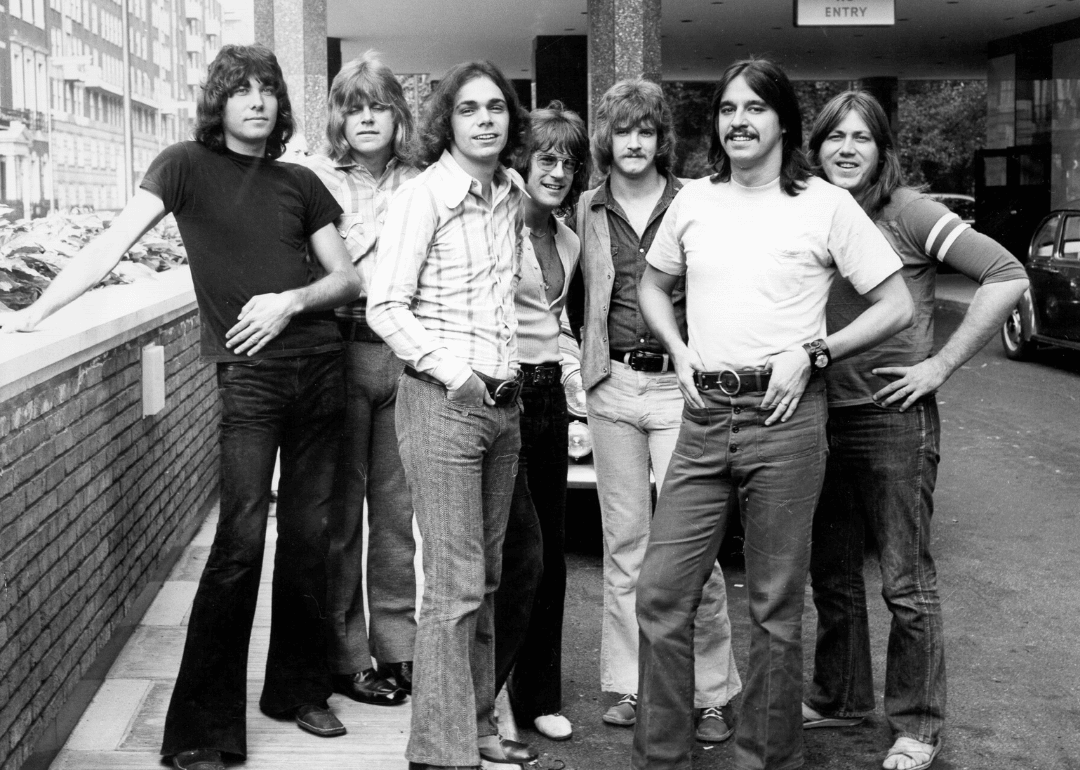
Portrait of the band Chicago. -Chicago: Then
Originally called the Big Thing, the band Chicago (short for Chicago Transit Authority) formed out of its namesake city in the late '60s. The original band lineup was Peter Cetera, Lee Loughnane, Terry Kath, Robert Lamm, Walter Parazaider, James Pankow, and Danny Seraphine. The band eventually moved out to Los Angeles, where it got its big start opening for Janis Joplin and Jimi Hendrix.
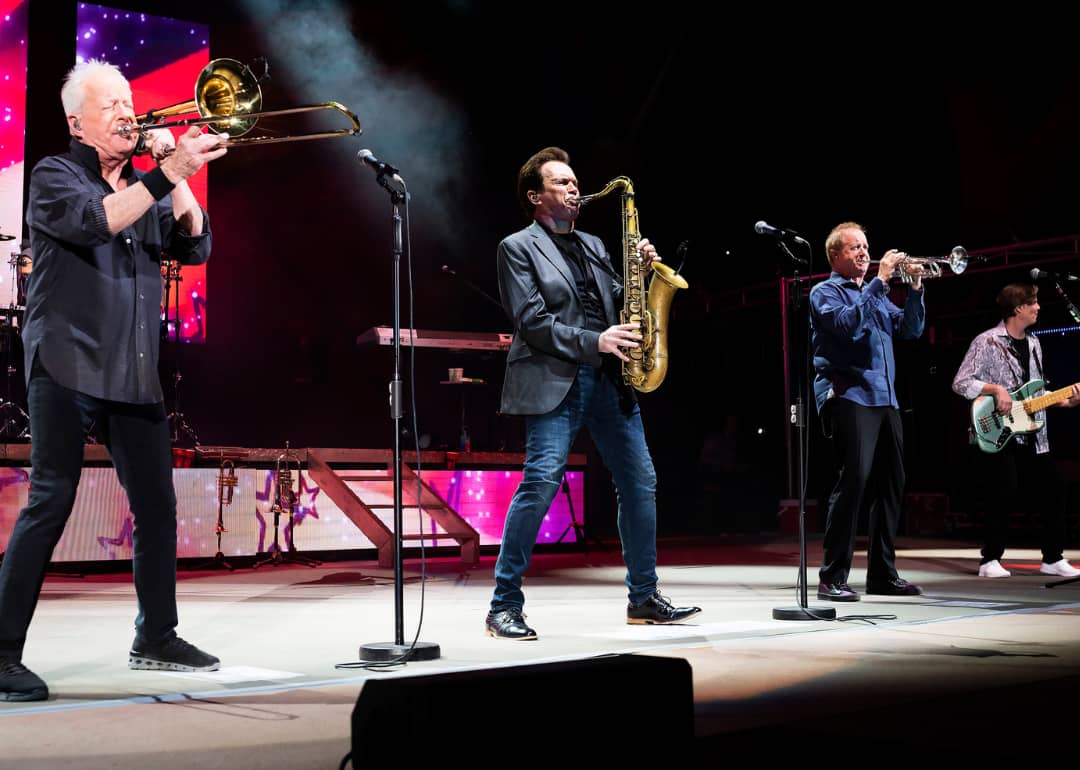
James Pankow, Walter Parazaide and Lee Loughnane performing in 2022. -Chicago: Now
Really hitting its stride in the '70s, Chicago lasted a decade with its original lineup before the tragic death of Terry Kath in 1978 forced the band to reevaluate. The band remained together and still tours today with a much-changed lineup.
Story editing by Chris Compendio. Copy editing by Tim Bruns.

Source: "AOL Entertainment"
Source: Entertainment
Published: September 3, 2026 at 03:00AM on Source: RED MAG
#ShowBiz#Sports#Celebrities#Lifestyle

:max_bytes(150000):strip_icc()/civil-war-movies-denzel-washington-kirsten-dunst-vivein-leigh-032426-tout-1-2d1779e89e1243e88c5f5be66a85132e.jpg "Ranking the 20 best Civil War movies in cinematic history")
:max_bytes(150000):strip_icc()/TWO-THOUSAND-MANIACS-090624-104a8600eaa749548282180b5e2331da.jpg)
:max_bytes(150000):strip_icc()/Kevin-Costner-Horizon-An-American-Saga-Chapter-1-052024-2a0c7da27a924243ba0f49202850c254.jpg)
:max_bytes(150000):strip_icc()/Jamie-Foxx-DJANGO-UNCHAINED-1dbb5197bf6c481b8ffc467a8b2fffac.jpg)
:max_bytes(150000):strip_icc()/The-Beguiled-090624-4ce27011ad3847adb6811d1c8c00ec2a.jpg)
:max_bytes(150000):strip_icc()/THE-OUTLAW-JOSEY-WALES-090624-eb7d50590f1c41858682a79d4ca1bfc7.jpg)
:max_bytes(150000):strip_icc()/GETTYSBURG-090624-39efc65dfb764e558eec123304201f9f.jpg)
:max_bytes(150000):strip_icc()/HOW-THE-WEST-WAS-WON-090624-0ce505cc899e40068ec419289ab752a8.jpg)
:max_bytes(150000):strip_icc()/lincoln-061923-1573dafb63444c579182fae19ca19177.jpg)
:max_bytes(150000):strip_icc()/ride-with-the-devil-jeffrey-wright-122223-75572c15f8c54f339a61c3c0d1b9c74b.jpg)
:max_bytes(150000):strip_icc()/dances-with-wolves-020224-e79cdbd5d380466e8aa3d0fa8d2f317e.jpg)
:max_bytes(150000):strip_icc()/Saving-Private-Ryan-Casablanca-and-Dunkirk43-01252023-fbf70ad5086e4b97806a52ae97009367.jpg)
:max_bytes(150000):strip_icc()/Civil-War-Spotlight-032724-2-384673c6f95c4720893c8463e6860388.jpg)
:max_bytes(150000):strip_icc()/Civil-War-041124-2-13a6990fe64d4d3cb17a43452155bb05.jpg)
:max_bytes(150000):strip_icc()/THE-MAN-FROM-COLORADO-090624-897b35a3143c47f3bf75c407895ef198.jpg)
:max_bytes(150000):strip_icc()/THE-SEARCHERS-090624-4a413c4a194145509e759cb83ba6ce87.jpg)
:max_bytes(150000):strip_icc()/COLD-MOUNTAIN-090624-0c84119666d74b85b8310e4056d8763e.jpg)
:max_bytes(150000):strip_icc()/THE-RED-BADGE-OF-COURAGE-090624-e56f7ea73b7843189831c1689cc0846d.jpg)
:max_bytes(150000):strip_icc()/GLORY-090624-0ad1a7a98978496ea9e131e047de3d4f.jpg)
:max_bytes(150000):strip_icc()/THE-GENERAL-090624-1-315438bd80e84ff7ab2cad92bc326923.jpg)
:max_bytes(150000):strip_icc()/12-Years-a-Slave-090624-4849177d959e484a98678a7caa3b27af.jpg)
:max_bytes(150000):strip_icc()/THE-GOOD-THE-BAD-AND-THE-UGLY-090624-affb958d5cb0476684f1c6a43533a81d.jpg)
:max_bytes(150000):strip_icc()/GONE-WITH-THE-WIND-090624-2096f1b24d4e4cacb3b01ab797be7da9.jpg)
:max_bytes(150000):strip_icc()/RISE-OF-THE-PLANET-OF-THE-APES-KINGDOM-OF-THE-PLANET-OF-THE-APES-Freya-Allan-PLANET-OF-THE-APES-Charlton-Heston-083126-fc0ee57fb7e64834a721f7fcf3e09c55.jpg "All 10 Planet of the Apes movies, ranked from worst to best")
:max_bytes(150000):strip_icc()/mark-wahlberg-planet-of-the-apes-1-2000-6f177be9736d47c9869708fbead034a5.jpg)
:max_bytes(150000):strip_icc()/BENEATH-THE-PLANET-OF-THE-APES-021325-1-431a648978b2462e813db16a96f68e03.jpg)
:max_bytes(150000):strip_icc()/BATTLE-FOR-THE-PLANET-OF-THE-APES-021325-0631fe430e774a92b659f88491a63f85.jpg)
:max_bytes(150000):strip_icc()/Kingdom-of-the-Planet-of-the-Apes-Owen-Teague-020924-2-1692a154e7e64b88bd585713573befe5.jpg)
:max_bytes(150000):strip_icc()/beneath-2-c1fc2518a67346a7a4d72b3030efc769.png)
:max_bytes(150000):strip_icc()/Dawn-of-the-Planet-of-the-Apes-Andy-Serkis-083126-5df977449ea74eec8efa62b6529e6863.jpg)
:max_bytes(150000):strip_icc()/KINGDOM-OF-THE-PLANET-OF-THE-APES-Freya-Allan-083126-0cbbb94ee5e84484be0f92e1477a90b5.jpg)
:max_bytes(150000):strip_icc()/Escape-from-Planet-of-the-Apes-Kim-Hunter-Sal-Mineo-Roddy-McDowall-083126-27d7a4a47e1f4fd48f4065e398d5f4df.jpg)
:max_bytes(150000):strip_icc()/War-for-the-Planet-of-the-Apes-andy-serkis-020226-afb408fb70fc4bf6aa38e6a12e2ac4ed.jpg)
:max_bytes(150000):strip_icc()/Rise-of-the-Planet-of-the-Apes-James-Franco-083126-b37f67458ba1462c986430d9c12fd8ff.jpg)
:max_bytes(150000):strip_icc()/PLANET-OF-THE-APES-Charlton-Heston-Linda-Harrison-Kim-Hunter-Roddy-McDowall-083126-4938218ebf4843309480508577bc22a7.jpg)
:max_bytes(150000):strip_icc()/CONQUEST-OF-THE-PLANET-OF-THE-APES-021325-1ff05d0879cc4e95901147eaf82a3faf.jpg)
